


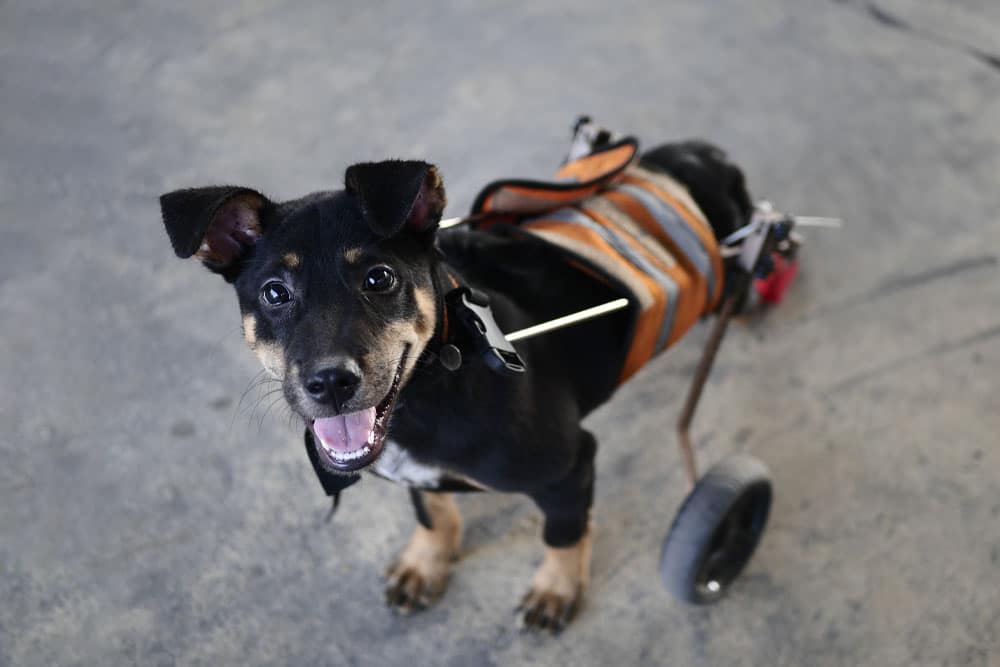
Slipping on tile, hesitating at the bottom of the stairs, taking a long beat before standing up from the bed. The early signs that your senior pet’s body is changing rarely look like a crisis. They look like aging, which is exactly why they are so easy to miss. And the mobility aids that help most depend less on how old your pet is and more on where they sit in the arc of mobility decline. Early on, when a dog or cat just slips on the floor or slows on stairs, traction aids and a few home changes are usually enough. As the back end weakens and walks get harder, a support harness gives you a way to steady and lift through the rough moments. When the rear legs can no longer hold weight, a mobility cart restores real independence. The thread that runs through all of it: slowing down is rarely just old age, and naming the cause early is what keeps your pet moving comfortably for longer.
At Boca Midtowne Animal Hospital, we start every senior mobility conversation with a full nose-to-tail wellness exam and a discussion about how your pet is really doing at home- not just how they look on our exam table. Our AAHA-accredited, Fear Free certified practice in Boca Raton builds low-stress handling into how we work with sore, painful, or anxious senior pets. If something about your pet’s gait has changed, reach out to our team and we will help you figure out what is next.
Things to Know About Senior Mobility Aids
Slowing down is a signal worth looking into, not a verdict to accept. The right aid matches the stage your pet is in right now, and the underlying condition shapes the plan as much as any product does.
- Traction first, harness in the middle, cart when the legs give out. Function tells you which one.
- Arthritis, disc disease, and nerve conditions all look similar at home but lead to very different plans.
- Pain control, weight management, and rehabilitation do more than any single device on its own.
Is It Just Age, or Is Something Treatable Going On?
When a senior pet starts slowing down, the cause is usually something we can treat rather than just the calendar catching up. The most common culprit is osteoarthritis in dogs and cats, which is manageable rather than inevitable, and the earlier we find it the more we can do about it. Support that starts while your pet still has muscle and confidence prevents the falls and compensatory movement patterns that speed decline. Waiting until the struggle is obvious means rebuilding from a weaker starting point, and that is harder on your pet and on you.
So the first move is never a product. It is an honest look at what changed and why. A senior pet’s slowing down can trace back to joint disease, disc problems, a nerve condition, an old injury that finally caught up, or several of those layered together. Each path leads somewhere a little different.
How Does Mobility Loss Move Through Stages?
Mobility loss tends to move through recognizable stages, and the right support shifts along with it. The framework below helps you think about what your pet needs now versus what to plan for next, though pets do not always move through stages neatly and some conditions skip stages quickly.
| Stage | What you see at home | What helps most | What the device replaces |
| Early | Stiff after rest, slips on floors, slower on stairs | Traction aids, home adjustments, joint support | Lost grip and confidence |
| Moderate | Needs a boost to rise, tires on walks, wobbles in the rear | Support harness, pain control, rehabilitation | Lost steadiness and strength |
| Advanced | Cannot reliably stand or push off with the rear legs | Mobility cart, full-body harness, close monitoring | Lost rear-limb support |
The stage your pet is in today is not the stage they will stay in forever, which is why it is worth revisiting the device decision every few months instead of locking in a single answer.
What Helps Most in the Early Stage?
Early-stage mobility change is easy to miss because it reads like ordinary aging. A dog stiff after a nap. A cat that stops jumping to a favorite windowsill. Paws that scrabble on tile when your pet tries to turn. At this stage, the legs still work. The real problems are grip and comfort, and both are very fixable.
The early-stage toolkit covers four levers:
- Indoor traction: Rubber toe grips slip over the nails and bite into hard floors so your dog stops sliding into a splay every time they try to get up.
- Outdoor traction: Traction booties protect the paws and add grip on rough or slick ground.
- Paw-knuckling aids: A no-knuckling training sock can help retrain foot placement and protect toes from scuffing.
- Arthritis-friendly home setup: Rugs along the paths your pet travels most, ramps to favorite resting spots, and raised food and water bowls add up to a real arthritis-friendly home setup for senior dogs. Senior cat home modifications include accessible perches and shallow-step litter boxes.
Here is the catch: a senior pet often resists even helpful changes when they all arrive at once. Phase them in over a few weeks instead of overhauling the house in a weekend, and your pet is far more likely to actually use them.
How Do Senior Cats Show Mobility Trouble Differently?
Cats hide pain far better than dogs, so their mobility decline tends to appear as changes in habit rather than an obvious limp. The quiet signs are the ones to watch: a cat that stops jumping to favorite perches, takes the stairs one at a time, hesitates at the edge of the litter box, sleeps in new ground-level spots, or develops a dull and matted coat over the back and hips. That last one is a classic sign that turning and reaching to groom those areas has become painful.
These quiet behavioral shifts deserve the same careful look a limping dog would get. Cats benefit enormously from the right home setup before any device enters the picture: low-entry litter boxes, a step or ramp to a favored windowsill, and soft, easy-to-reach resting spots often do more than any product. If your cat has stopped jumping and started sleeping somewhere new, that is the signal to come see us, not a quirk to wait out.
Are Traction Aids Enough for a Slipping-but-Walking Dog?
When the problem is grip rather than strength, traction really is the whole fix. Your pet does not need to be lifted or supported. They just need their feet to stop sliding out from under them. The toe grips and booties with rubber grips are the workhorse tools here. Runners along the main paths your dog travels do the rest. A wellness check is worth doing alongside the home changes to make sure strength really is intact and grip is the only piece missing. The point of all of it is the same: head off the strains and falls that slick floors cause before they become the reason your dog gives up on moving at all.
When Is It Time for a Support Harness?
The middle stage is where a support harness really earns its place. The back end has weakened, walks get shorter, and your pet needs a steadying hand to rise or manage stairs, but there is still real leg function to work with. A harness lifts and steadies through the hard moments without taking over.
Which style fits depends on where the weakness sits:
| Harness type | Best fit | Example |
| Rear-end | Hind-end weakness, disc recovery, early degenerative myelopathy | Walkabout rear-end harness |
| Front-support | Front-end weakness, shoulder or chest support | Chest-style harness |
| Full-body | Diffuse weakness, both ends needing lift | Help ‘Em Up, Fur Tent lift harness |
Fit beats brand with any of them, every time. A harness that rubs or sits wrong creates its own gait problems, so the sizing check is part of the job, not an afterthought. For an anxious pet, our Fear-Free approach makes that first sizing session much easier on everyone.
When Does My Pet Need a Wheelchair Instead of a Harness?
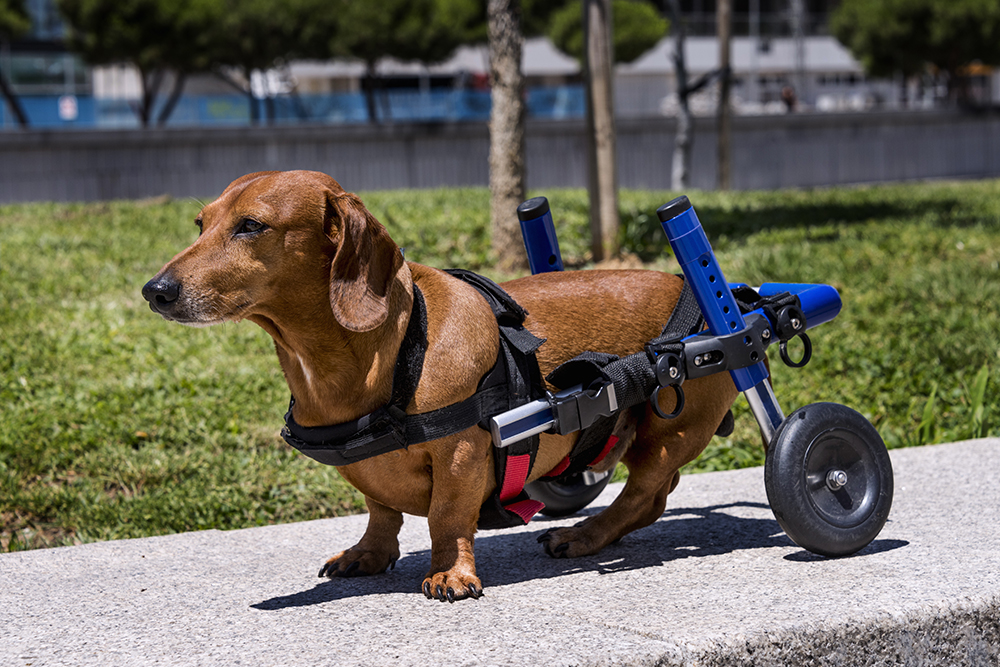
A mobility cart, the proper name for what most people call a dog wheelchair, steps in when a harness is no longer enough. That means the rear legs can no longer hold your dog up or push off on their own. The cart carries the weak or paralyzed limbs and hands back the freedom to move, sniff around, and keep up with the family on walks.
The catch is in the fit and how it is used. A cart sized wrong can cause pressure sores and odd compensations elsewhere in the body, so the measurements matter. Carts are also meant for active outings, not for parking a dog in one for hours. Most dogs take a week or two of short, upbeat sessions before the cart feels normal, and we encourage families to keep the early sessions positive and brief. If you are weighing whether it is time, talk through the timing with us before you buy.
Why Does the Diagnosis Change Which Device Fits?
The cause behind mobility loss shapes which device fits, and for how long your pet will need it. The same harness can be temporary for one condition and permanent for another, which is why the diagnosis matters as much as the symptoms.
| Diagnosis | Typical device path |
| Intervertebral disc disease | Rear harness through recovery; many dogs graduate off entirely, though some need a cart long-term |
| Fibrocartilaginous embolism | Rear harness; non-progressive, so most dogs improve, though some need a cart long-term |
| Degenerative myelopathy | Traction early, rear harness next, cart when legs no longer hold weight (progressive) |
| Amputation after osteosarcoma or trauma | Most adapt within weeks; front-leg amputees lean on a chest harness more, since dogs carry most of their weight up front |
The amputation surgery decision itself is one we walk families through carefully before the appointment, and the Tripawds community is a good companion through that adjustment afterward.
How Do I Make Sure the Device Actually Fits?
The best device with the wrong measurements still fails, so fitting really deserves its own attention. A harness should clear the armpits and groin without rubbing, sit snug without pinching, and let the legs move through a full stride. A cart needs the saddle height, length, and wheel position set to the individual dog. Online retailers give sizing guides that get you most of the way there, but having our team verify the fit and watch your pet move in it catches the small errors that turn into sores or new compensations a week later.
What Else Belongs in a Mobility Plan?
A device is one piece of comprehensive mobility management, not the whole plan. The full plan usually layers several things together:
- Pain control matched to the cause (anti-inflammatories, monoclonal antibody injections like Librela for dogs and Solensia for cats, and other medications depending on diagnosis)
- Weight control, where even a ten percent reduction eases load on every joint
- Veterinary physical rehabilitation, which uses targeted exercises and tools like progressive resistance bands to hold onto strength as your pet’s needs shift.
The home setup wraps the rest of it. Small adjustments to floors, beds, food bowls, and litter access often do more than any single product on the shelf.
When Is a Mobility Change a Same-Day Emergency?
Most mobility loss creeps in slowly, but a handful of changes need attention today. Come straight to our urgent care during open hours, or head to the nearest 24/7 veterinary ER outside those hours, if you see:
- Sudden paralysis
- A paw that knuckles under and stays there
- An inability to bear weight at all
- New dragging of the rear legs
These can signal an acute spinal event, and they are not wait-and-see moments.
What Do Pet Families Most Often Ask About Mobility Aids?
How Do I Know It Is Time for a Cart Rather Than a Harness?
The line is whether the rear legs can still hold and move your pet. If they can walk but tire, wobble, or need a lift to stand, a harness usually fits. Once the back legs cannot reliably support weight or start a step, a cart becomes the better tool.
Will My Pet Actually Use It?
Most pets adapt within a week when the introduction is patient and upbeat: treats, short sessions, and a calm setting. Some need more time and gentle desensitization, and the low-stress handling we use makes the first sessions easier for anxious pets.
Are These Devices Covered by Pet Insurance?
Coverage depends on the policy and whether the underlying condition is covered. Many plans reimburse veterinary-prescribed equipment when it is documented as medically necessary, so it is worth checking your specific policy before buying.
The Right Device Is the One That Fits Your Dog’s Life
Watching your pet slow down is hard, and not knowing whether it is just age or something to act on is often the hardest part. Our team is here to help you read the change, name the cause, and choose the support that fits your pet today and your lifestyle.
If something about your pet’s gait has changed or you’ve noticed them struggle to do their once-normal activities, schedule an appointment and we will work through it together.














Leave A Comment