


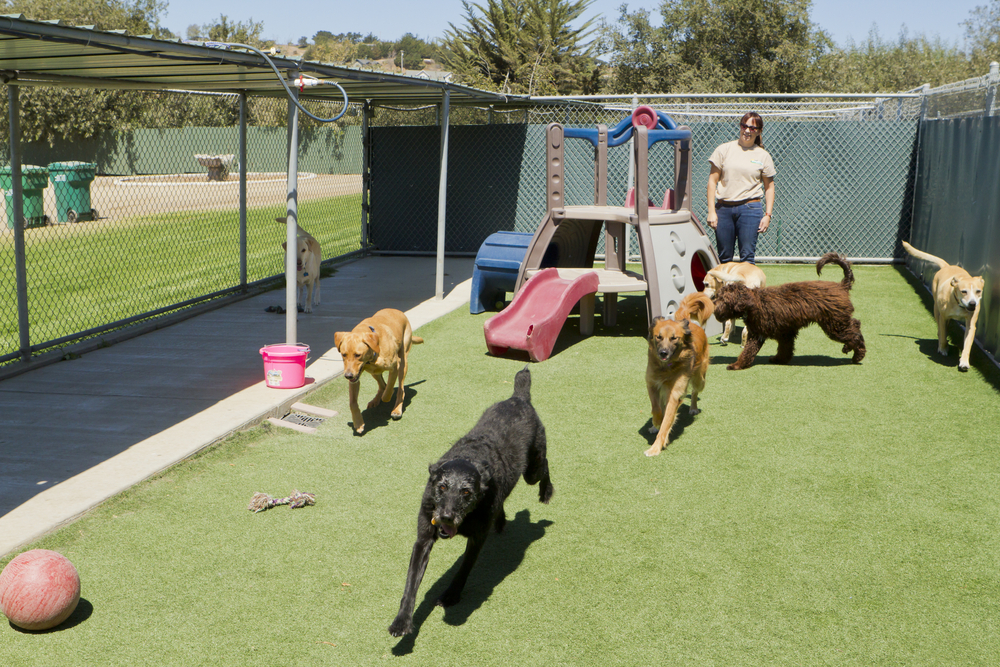
Choosing a dog daycare can feel harder than it should. A cheerful lobby and a busy playroom may look reassuring, but they do not always tell you what is happening behind the scenes. A safe dog daycare should evaluate every new dog before allowing them into group play, require current vaccines and parasite prevention, keep play groups small and well matched by size and play style, and have staff trained to read canine body language before problems escalate. When you tour or call, pay close attention to how clearly the team answers questions about screening, staff-to-dog ratios, group separation, and what happens if a dog gets injured or starts a scrap. If a facility hesitates, gets vague, or brushes off those questions, that tells you a lot.
Daycare can be a great fit for a social, well-matched dog, and the vaccine and wellness groundwork is where Boca Midtowne Animal Hospital comes in. We run The Resort daycare and enrichment program on site, so the people watching your dog are the same people who know their medical history, including the vaccine protection most daycares require. Our Fear Free approach keeps the vaccine visit itself low-stress and guides how we handle every pet that walks through our doors, whether for medical needs or daycare and boarding. If you are weighing a facility and want a vet’s read on what to ask, book a visit and we will work through it with you.
The Short Version
- The questions you ask before the first drop-off are your single best filter; a place that answers each one specifically is telling you it runs a tight ship.
- Vaccines and parasite prevention lower the risk of illness in group settings sharply, but no requirement erases it entirely, so keeping sick dogs home matters too.
- Group play is not right for every dog, and choosing a quieter option like boarding for a dog who prefers calm is a perfectly good call.
- A wellness visit a week or two before a trial day catches the surprises, from lapsed vaccines to a subtle limp, so the first day is only about whether your dog has fun.
Which Illnesses Travel Fastest Through a Group of Dogs?
Group settings raise exposure to contagious disease even with excellent cleaning and strict vaccine rules, simply because dogs share air, water, and space. The best defense is a three-part one: vaccination, consistent parasite control, and keeping sick dogs home. The illnesses that spread most readily:
- Parvovirus: Among the most dangerous group threats, and why unvaccinated or sick dogs must stay out.
- Kennel cough: Airborne and spread through shared water bowls.
- Leptospirosis: Spread through contaminated puddles and standing water, a real concern in our rainy climate.
- Canine influenza: Which many daycares now vaccinate against outright.
- Oral papilloma virus: Warty mouth growths in younger dogs that usually resolve on their own.
If your dog seems off after a daycare day, our team can evaluate post-daycare illness and we see urgent cases during our open hours. We also accept emergency calls until midnight every day, and our concierge care membership provides access to virtual exams during evenings and weekends, with direct access to Dr. Man. If you’re worried, we’re here to help.
Could Your Dog Bring Home a Parasite or Skin Bug?
Shared yards and close contact raise the odds of picking up a parasite or a contagious skin condition, and some of these hide well. Routine fecal testing catches intestinal infections early even when a dog’s stool looks normal. Maintaining year-round parasite prevention ensures you’re not bringing home external parasites. After group play, watch for these:
- Giardia: A waterborne intestinal parasite that causes loose stool.
- Ringworm: A contagious fungal skin infection, not a worm at all, showing up as circular patches of hair loss.
- Sarcoptic mange: A highly contagious mite that brings intense itching, hair loss, and crusty skin.
- Fleas: These annoying pests readily jump from one dog to another, and can infest your home rapidly.
For any of these, we offer diagnostic and skin workups for parasites or contagious conditions, so a small problem gets sorted before it spreads at home.
After Pickup, What Should You Look Over Right Away?
Give your dog a quick once-over after every pickup: run your hands over their body, check between the toes, and look at the eyes and face. Most findings are nothing, but eyes and bite wounds deserve a prompt call. Even the best-run daycare sees the occasional scuffle, and a few scrapes are expected with rough-and-tumble play time.
Minor scrapes usually just need gentle cleaning with warm water and a watchful eye for a day or two. Some findings deserve more attention. Redness, squinting, or discharge in an eye can signal conjunctivitis or a scratch to the eye itself. Bite wounds deserve a closer look than their size suggests, since a small puncture can seal over the surface and trap a serious infection beneath the skin. Reach out for any swelling, tenderness, or discharge from a wound after daycare, even one that looks trivial.
Which Shots and Preventives Will a Daycare Insist On?
Most daycares require rabies (legally mandated in Florida), DHPP (distemper, hepatitis, parvovirus, and parainfluenza), and bordetella for kennel cough. Many also require canine influenza and leptospirosis, commonly recommended in warm, wet climates like ours. Ask exactly which vaccines a facility requires and how it verifies them before you enroll.
Verification matters because the dog with lapsed records is the one who puts everyone else at risk. And requirements lower risk sharply but never bring it to zero, which is why a symptom-free return policy after any illness is just as important.
Parasite prevention rounds out the picture. Routine fecal testing matters because intestinal parasites can spread through a shared yard long before a dog’s stool ever looks abnormal, and year-round heartworm, flea, and tick prevention is non-negotiable in South Florida. Our team handles confirming vaccine timing and providing documentation and can tailor a prevention plan to a dog who spends time in group settings.
What Separates a Great Daycare From a Mediocre One?
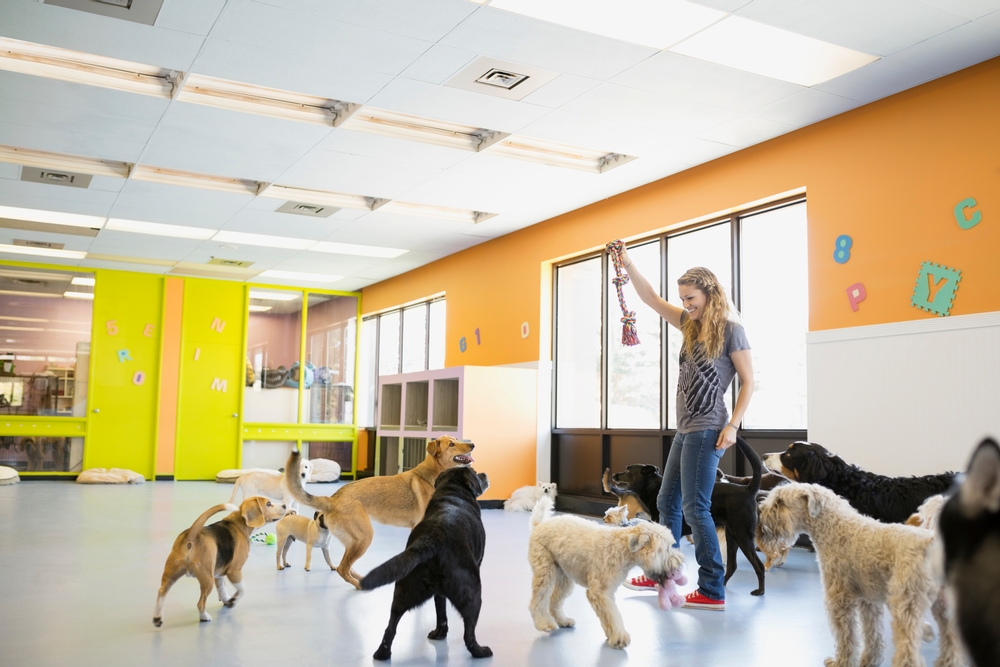
A good dog daycare pairs safe, well-matched play with structured rest, close supervision from trained handlers, and clear communication with you. The staff sort dogs by size and play style, watch body language constantly, and step in early when a dog signals stress. Quality varies enormously from one place to the next, and a clean front desk tells you almost nothing about the play floor. A quality facility does more than burn off energy; structured socialization builds confidence when dogs meet new playmates in a calm, managed setting.
A poor daycare brings a new dog into a group without careful introductions or matching size and play styles. If the staff aren’t trained on body language (which is a big part of our Fear Free training), aren’t watching and intervening when play gets a little too intense, or don’t have first aid training, skip that facility. The mark of safe group play is not a floor with zero disagreements but a trained team that heads off trouble early.
Walk in with a short list of questions, and let their answers tell you almost everything.
| Ask about | A good answer sounds like | A red flag sounds like
|
| Staff-to-dog ratio | A specific number, and it drops for higher-energy groups | “We keep an eye on things” |
| Handler training | Ongoing training in body language and de-escalation | Vague or “they’re all dog people” |
| Screening and trial days | Every new dog is temperament tested first | Same-day walk-ins with no evaluation |
| Grouping | Dogs sorted by size and play style, introduced gradually | One big group for everyone |
| Stress response | Staff give overwhelmed dogs a quiet break | “Dogs work it out themselves” |
| Owner observation | You can watch, in person or by camera | No visibility into the play area |
| Rest protocol | Scheduled rest and nap time built in | Nonstop play all day |
We are glad to help you prepare your dog for a daycare evaluation before that first visit.
Beyond the Staff, Does the Building Itself Hold Up?
The building matters as much as the people. In South Florida, that means heat and humidity most of the year, sudden afternoon storms, and long stretches when outdoor play is not safe.
- Climate control: Reliable air conditioning, plus a plan for storms and power hiccups.
- Heat awareness: Staff who recognize early overheating and cool a dog down fast.
- Indoor enrichment: Real activities for the many days dogs cannot be outside here.
- Resource guarding: Thoughtful toy and treat management so food or a favorite ball does not spark a fight.
- Cleaning and surfaces: Frequent disinfection and non-slip, easy-to-clean flooring.
One caution: flat-faced (brachycephalic) breeds like Bulldogs and Pugs, along with senior, overweight, and heart- or airway-compromised dogs, overheat far faster than others and need extra watching in our climate. Dr. Man and our team are experts in brachycephalic breed care, offering laser surgery corrections for airway issues and knowing exactly what to watch for to keep those flat-faced pups safe.
At What Age Is a Puppy Ready to Join?
Puppies are ready for a general daycare group once their core vaccination series is complete, usually around sixteen weeks. Before that, their immune systems are still catching up, and a mixed group of adult dogs is a lot of exposure for a body that cannot fully defend itself yet.
Some facilities run dedicated puppy groups with stricter health rules, which can be appropriate a little earlier. If you are considering one, ask about age-matched grouping, short session lengths, cleaning between groups, complete separation from adult dogs, and staff ratios and training. With sensible precautions, early socialization during the vaccine series is safest in a structured puppy class, which requires proof of age-appropriate vaccines from every participant, keeps the group small, and cleans between sessions. Once the series is finished and your puppy has some class time under their collar, a daycare transition tends to go smoothly. Our team is happy to recommend local puppy classes that are ideal for socialization while their immune system is still developing.
Does Group Play Suit Your Particular Dog?
Not every dog belongs in a busy playgroup, and that is completely fine. Every dog has a different tolerance for group play that shifts with temperament, age, and health, so a dog who loved daycare at two may want something calmer at ten. Your dog’s body language will tell you.
Reading body language is the clearest way to tell a happy dog from one who has had enough: a loose, wiggly body and play bows are good signs, while a dog who keeps trying to hide, tucks their tail, or freezes is asking for a break. For an anxious or reactive dog, our team provides behavior counseling for anxious or reactive dogs to help you decide whether a group setting is worth trying.
When Is Boarding a Better Fit Than Daycare?
For dogs who prefer quiet, need one-on-one attention, or have medical needs that make a rowdy playgroup risky, supervised boarding is often the safer, kinder choice. A dog with a chronic illness, a twice-daily medication schedule, or a recent surgery does not belong in a scrum, but they still deserve a comfortable place to stay. We offer supervised boarding in a calmer environment for exactly these dogs, so a calmer temperament or a health condition never means missing out on good care.
Daycare or the Dog Park: Where Is Your Dog Safer?
Your dog is safer at a well-run daycare, which screens every dog before entry, sorts playgroups thoughtfully, and keeps trained staff on the floor the entire time. A public dog park does none of that: anyone can walk in with any dog, vaccinated or not, social or not.
The main dog park risks come down to no health screening at the gate, uneven supervision, and no accountability when an encounter goes wrong.
That said, dog parks are not automatically off-limits. A confident, well-socialized dog with an attentive person watching closely can do fine at a quiet park during off-peak hours.
How Do You Set Your Dog Up for a Good First Day?
Gradual transitions and honest conversations with the staff set a dog up to succeed. When you handle the health and paperwork ahead of time, the trial day gets to be about one thing only: whether your dog actually enjoys the group.
Trial Sessions and Honest Communication
The smoothest starts happen slowly. Book a short trial session rather than a full day, and keep your goodbye calm and quick, since a drawn-out, anxious drop-off tells your dog there is something to worry about. Be candid with the staff about the things that matter: medication schedules, anxiety triggers, physical limits like a bad hip, and any behavioral tendencies you know about. Staff can only manage what they know, so holding back to make your dog look like a better candidate helps no one.
Common Questions Pet Families Ask About Dog Daycare
How often is too often for daycare?
There is no single right number; it depends on your dog. Many social dogs thrive on two or three days a week, with rest days in between to recover. A dog who comes home pleasantly tired and is eager to return is well matched to their schedule, while one who seems worn down, over-aroused, or reluctant may be telling you to dial it back.
Are minor scratches after daycare a concern?
Usually not. A superficial scrape or two is normal after a day of play and typically just needs gentle cleaning and a couple of days of watching. The ones to take seriously are puncture wounds, anything near the eyes, and any scratch that swells, oozes, or grows tender over the next day. Bite punctures in particular can look tiny while trapping infection underneath, so when in doubt, give us a call.
Why does my dog who used to love daycare no longer want to go?
A change of heart is worth attention. Sometimes it is age, as an older dog outgrows the energy of a big playgroup. Sometimes it points to a health issue, since pain from arthritis or a dental problem can make jostling unpleasant. A wellness exam is a smart first step to rule out a physical cause before assuming it is purely preference.
Making the Call, With Your Vet Alongside You
The right daycare for the right dog is a genuine gift: safe play, structured rest, required vaccines, and staff who take your dog’s wellbeing seriously. That is why the questions come first, and why the health groundwork matters, and it is work you never have to do alone. Come tour The Resort at Boca Midtowne to see what quality daycare and boarding in Boca Raton looks like.
Whatever direction you are leaning, we would love to help you get there with confidence. Reach out for help deciding between daycare and boarding, and we will figure out the best fit for your dog together.













Leave A Comment