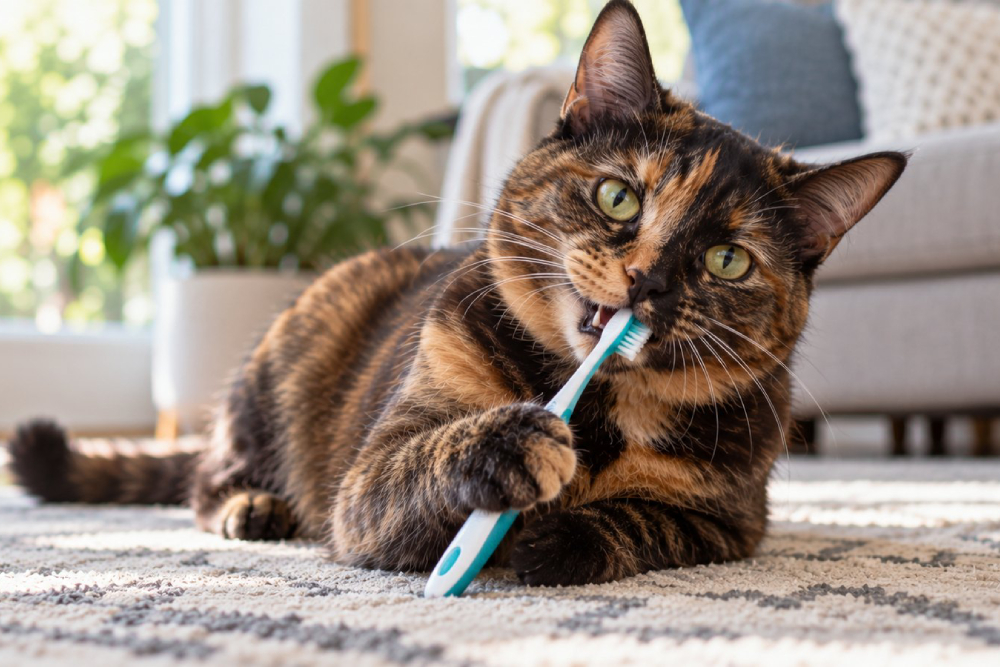
Fewer dental products for dogs and cats live up to their packaging than you would hope, and the ones that do belong next to a toothbrush, not in place of it. Brushing is still the most effective way to physically clear plaque off the tooth, and the only one that reliably reaches the gumline where disease starts. Wipes, gels, water additives, chews, and dental diets each have a place, especially those with the Veterinary Oral Health Council (VOHC) seal, but they earn their keep layered on top of brushing rather than as a substitute for it. That matters because plaque hardens into tartar within days, and what happens at home between professional cleanings decides how often your pet needs one and how much each visit involves.
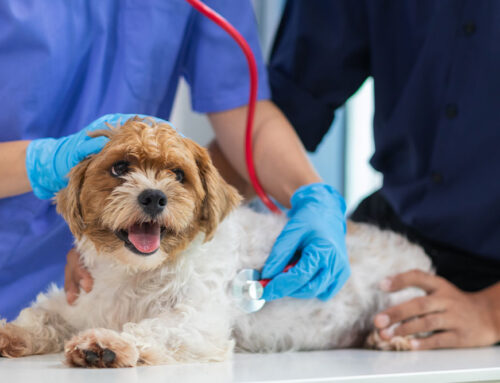
Boca Midtowne Animal Hospital in Boca Raton has special expertise with flat-faced breeds, whose crowded mouths trap plaque faster than most, so every wellness exam here includes a close look at teeth and gums. Plenty of pets arrive hating anything that comes near their face, and as a Fear Free certified facility we can do that part of the exam without making the next visit harder, then help you settle on a routine that fits your pet and your schedule. When gingivitis has already set in, our AAHA-accredited hospital can clear what has hardened below the gumline, which is the part a home routine cannot reach. If you are not sure whether the wipes or chews you already bought are doing anything, bring them along and ask us.
What Works on Plaque Between Cleanings
- Brushing is the only tool that lifts plaque off the tooth at the gumline, and nothing on the shelf fully replaces it.
- Wipes come closest for a pet who refuses bristles, and dental diets and daily chews each cut plaque measurably.
- Gels, sprays, and additives accomplish little alone. Their value shows up layered over brushing or wiping.
- Home care slows disease down. Lifting hardened tartar and treating what sits under the gum is a cleaning’s job.
What’s Really Happening in Your Pet’s Mouth Between Cleanings?
Between cleanings, your pet’s mouth runs a race between plaque and your routine. Plaque forms within hours of a meal, and tartar starts to form in two to three days. Once it reaches the gumline, periodontal disease starts dismantling the ligament and bone anchoring each tooth.
Gingivitis comes first. Red, puffy margins that bleed when you touch them, and you can still reverse that stage. What follows you cannot, since the inflammation consumes the attachment holding the tooth in its socket and bacteria gain an open route into the bloodstream. Advanced dental disease tracks alongside changes in the heart, kidneys, and liver.
Daily home care slows that progression. Still, the part of the tooth that decides the outcome sits below the gumline, and reaching it takes a cleaning under anesthesia with your pet still and the airway protected. Home care holds the daily buildup down, and routine wellness exams are where we decide how far apart cleanings can safely sit.
Why Does Brushing Still Beat Everything Else on the Shelf?
Brushing still beats everything else on the shelf because it works mechanically. Bristles break up the bacterial biofilm and sweep it off the enamel before saliva minerals cement it down, right at the gum margin where disease starts. No enzyme, rinse, diet, or chew matches that. Plaque behaves like the slick film on a creek stone: rinsing barely touches it, while a scrubbing takes it off.
How Often Do You Have to Brush for It to Count?
How often you brush decides whether the habit counts at all. Every day is the target, and every other day is the realistic floor in a busy house. Brushing frequency is where most routines quietly fall apart. In studies, brushing every other day measurably cut plaque and tartar across several months. A once-a-week schedule showed nothing worth measuring. Frequency is the fix here, not a fancier product.
What If Your Pet Hates Having Their Mouth Touched?
Most pets come around to a brush when you build up across a week or two rather than starting with one. Pets adjust to having their mouths handled every day, and anxiety scores fall over that stretch instead of climbing. “My dog would never let me” is usually a problem with the introduction, not a fixed trait. Puppies and kittens who meet a brush early treat it as unremarkable.
| Step | How it goes | Your green light |
| 1. Contact | Lift the lip, rest a fingertip on the muzzle and gum for a second or two, then pay well | Your pet leans toward your hand |
| 2. Flavor | Offer pet toothpaste off a fingertip and let them lick | They go hunting for the tube |
| 3. Fingertip | Run a finger or finger brush over the canines and back teeth | They hold still through a whole pass |
| 4. Bristles | Soft brush, outer surfaces only, a handful of teeth at a time | One full circuit takes under a minute |
Skip human toothpaste entirely. It carries fluoride your pet will swallow, foaming agents that unsettle a stomach, and in some brands xylitol, which can crash a dog’s blood sugar to a dangerous level. Pet pastes are built to be eaten and usually taste of poultry or malt, and that flavor does half the convincing for you.
Angle matters far more than pressure when brushing a dog’s teeth, with bristles tipped toward the gumline at roughly 45 degrees and most of the work on the outer surfaces. Cats want a different approach, and brushing a cat’s teeth goes best in 15- to 30-second passes with a small soft brush, coming at the mouth from the side of the head. Sessions that run long, a disliked flavor, and too much pressure on sore gums are the predictable setbacks. Bring your brush to the next visit and our Fear Free certified professionals can show you how to do it correctly.
What Can You Use If Your Pet Won’t Tolerate a Brush?
When your pet won’t tolerate a brush, a dental wipe, a gauze square, or a soft cloth over your finger is the genuine alternative. Used every single day, dental wipes and cloths performed nearly as well as a toothbrush on plaque and gum health, though hardened tartar shrugged off everything in that comparison, brush included. That suits the opinionated cat, the senior with a sore mouth, and the anxious dog who accepts a hand but not a handle.
The trade-off is reach. A cloth glides over the crown without slipping into the shallow groove between tooth and gum the way bristles do, and it rarely reaches the back molars in a small mouth. Bleeding gums, souring breath, or chewing on one side mean the wipe is no longer enough. If handling is the obstacle rather than the tool, the low-stress handling techniques we use in the exam room work just as well on your kitchen floor.
Are Gels, Sprays, and Water Additives Worth Buying?
Gels, sprays, and water additives are worth buying as a second layer rather than a first one. On their own, water additives moved plaque and tartar very little. Add modest mechanical care alongside them, a quick brushing or a daily chew, and the pair outperforms the mechanical care by itself.
Gels, powders, and sprays run on the same logic. You smear them along the gum or shake them over a meal, and they deliver enzymes, chlorhexidine, zinc salts, or sodium hexametaphosphate to slow bacterial growth and block mineralization. Something has to break up the biofilm before an antimicrobial reaches the gum tissue underneath. Their best showing comes in the weeks after a cleaning, where daily use cut plaque, tartar, and gum bleeding well below what no follow-up care produced.
Palatability is the practical hurdle, and cats notice a change in their water right away. Start at half strength, build up across a week or two, and keep a second bowl of plain water in the house. If your pet has a kidney or bladder history, ask before you start rather than after. That question belongs with our exams and preventive care, not the aisle at the pet store.
Can Food and Chews Do Real Work on Plaque?
Food and chews do real work on plaque, just not the work the packaging implies. Neither reaches below the gum, and both stretch the interval between cleanings rather than replacing them.
Dental kibble built to crumble against a tooth instead of shattering under it left cats with less gingivitis and less tartar than the other formulations tested. For a cat who will never accept a brush, that counts as a real intervention. It buys time for flat-faced dogs, small breeds with crowded mouths, seniors, and any pet already losing bone around a tooth. Daily dental chews pulled gum inflammation and plaque down measurably against kibble alone, though “dental” on a bag is marketing language, not a standard.
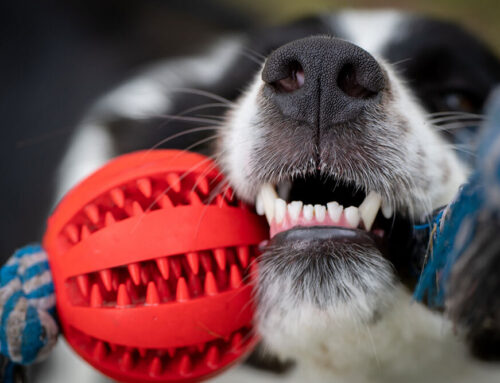
Slab fractures of the upper fourth premolar rank among the most common dental injuries we treat. Two quick tests catch chews hard enough to fracture a tooth: press a thumbnail in and look for a dent, then try to bend it and look for flex. No dent and no flex means no. Antlers, hooves, cooked or raw bones, and rigid nylon are the usual culprits that break teeth.
Match the chew to the chewer and size up, since a determined 80-pound dog and a senior with worn enamel need different products. Anything small enough to swallow whole becomes a choking or obstruction problem. Stay in the room, and take the piece away once it is small enough to gulp. Cats count too, and feline dental treats are softer by design, since a cat’s jaw is not built to grind through something made for a Labrador.
A cracked tooth rarely looks dramatic. Plenty of pets keep eating on a broken premolar while infection builds at the root, and a chipped or discolored tooth is worth an appointment. We handle urgent care during our open hours and take emergency calls seven days a week until midnight.
Which Dental Products Have Proof Behind Them?
The dental products with proof behind them carry a seal from the Veterinary Oral Health Council, an independent group that reviews trial data submitted by manufacturers. Its seal goes only to products clearing a defined threshold for plaque or tartar reduction. VOHC-accepted products run across chews, diets, gels, wipes, and additives. Shopping from that list skips most of the noise.
| Option | What it actually delivers | Best use |
| Toothbrush | Top-tier plaque removal, and the only option reaching the gum margin | Every day, or every other day at minimum |
| Dental diet | Less gingivitis and tartar from properly engineered kibble, strongest data in cats | Your everyday base layer |
| Dental chews | Measurable drops in plaque and gum inflammation when given daily | A once-a-day habit that sticks |
| Wipes or cloth | Nearly brush-level results on plaque and gum health with daily use | The pet who refuses bristles |
| Gels and sprays | Genuine antibacterial effect, weaker than mechanical care alone | A layer over brushing or wiping |
| Water additives | Modest alone, useful next to mechanical care | The nights brushing does not happen |
Brand matters far less than whether your routine covers both halves, something that rubs and something that kills bacteria. Ignore any product promising to turn a tartar-covered tooth white and healthy, since nothing applied at home lifts tartar that has already mineralized.
Where Does Home Care Run Out of Road?
Home care runs out of road once tartar cements onto the tooth and infection moves beneath the gum. No brush, wipe, chew, or additive reaches that territory. It belongs to a cleaning with your pet asleep, where each tooth gets scaled under the gum, polished smooth, probed surface by surface, and imaged.
Dental X-rays cover roughly half the picture, the half below the visible crown. Bone loss around a root, an abscess, a retained root tip, and the painful resorptive lesions common in cats stay invisible from above and show up plainly on a radiograph. Polishing counts too, since scaling leaves microscopic grooves that plaque grips unless they are smoothed over.
Scraping tartar off a conscious pet tidies the part of the tooth you can see and leaves the part causing disease untouched. That gap is what makes anesthesia-free dentistry a poor trade: a whiter-looking mouth while bone loss keeps advancing under the gumline.
How often cleanings come around depends on the mouth in front of us. Crowded, rotated teeth in flat-faced breeds tend to need attention sooner, along with small dogs, cats with a history of resorption, and any pet who has already lost attachment. Good home care does push that interval out. If it has been a while, or the breath has turned, schedule a dental exam and we will stage what is actually there first.
How Do You Build a Dental Routine That Survives a Busy Week?
A dental routine survives a busy week when it hangs off something you already do without thinking. Brush after the evening walk, wipe while the coffee brews, drop the chew in the bowl at dinner. Pick the anchor first, then keep sessions short enough that nobody dreads them.
Start layered rather than sequential. Waiting until brushing is perfect before adding anything else means the second tool never arrives. Choose two from day one, and keep a wipe or a chew on the counter for the busy nights. Watch for the wins: pink gum margins that do not bleed, neutral breath, and a pet who stops flinching when you lift the lip. Bleeding gums, a loose or discolored tooth, chewing on one side, dropping food, or a worsening smell call for an exam, not a new product.
Progress here gets measured in months, not days. If a step keeps collapsing at home, our team can talk you through other options.
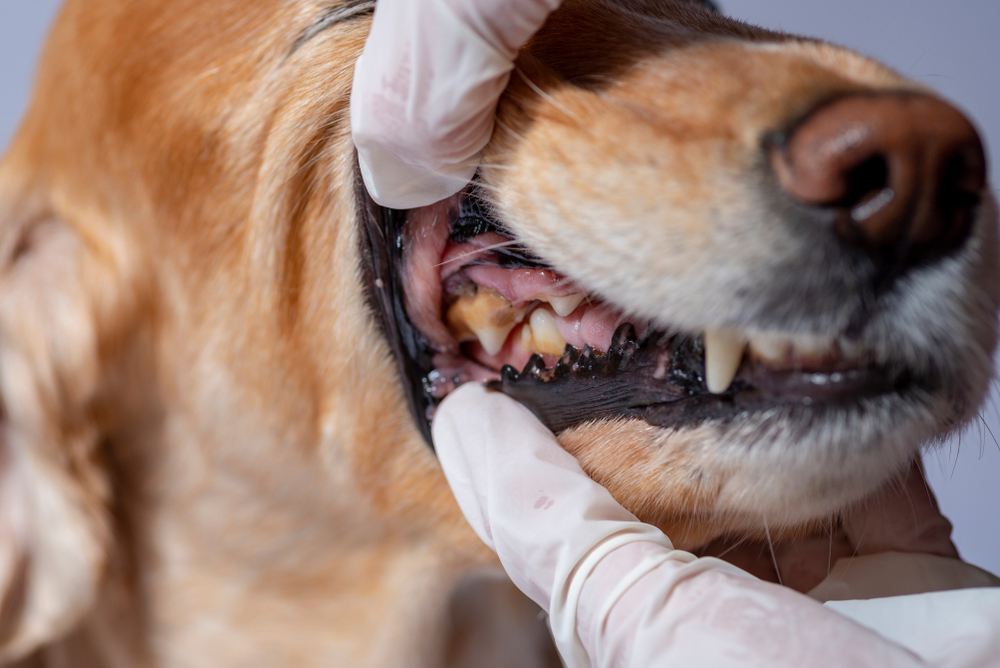
Dental Home Care Questions Pet Families Ask Us Most
Is It Too Late to Start Brushing an Older Dog’s Teeth?
It is not too late to start brushing an older dog’s teeth, though the starting point shifts. An older dog carrying tartar and inflamed gums often finds brushing uncomfortable, and a cleaning first makes the home routine both kinder and more effective. After that, the same slow introduction works at any age. Seniors frequently accept a soft finger brush more readily than a handled one.
Can I Use Baking Soda, Coconut Oil, or Human Toothpaste Instead?
Baking soda, coconut oil, and human toothpaste all make poor substitutes for pet toothpaste.
- Human toothpaste carries fluoride meant to be spat out, foaming agents that upset stomachs, and sometimes xylitol, which is dangerous for dogs.
- Baking soda is alkaline enough to bother a stomach and unpleasant enough to end the habit within a week.
- Coconut oil is harmless and does essentially nothing to plaque, and the calories add up in a small pet.
My Pet’s Breath Is Terrible. Does That Mean a Cleaning?
Terrible breath usually does point toward a cleaning, since it means bacteria have been working under the gum for a while. Mild sourness sometimes improves with consistent home care over a few weeks. Breath that clears a room, or breath alongside drooling, bleeding, or a changed appetite, points to disease past the reach of a brush. Kidney disease and oral masses can smell similar and are worth ruling out.
You Don’t Have to Sort Out Your Pet’s Dental Routine Alone
Nothing on a shelf will create perfect oral health. The combination the evidence keeps pointing to is steady mechanical care at home, a chemical product layered alongside it, and professional cleanings when the mouth calls for them. The families who get furthest found a version they could repeat routinely without a battle.
If you’re not sure where your pet’s mouth stands right now, or you’d rather have someone hand you the brush and correct your grip than guess at it, call or text us at Boca Midtowne Animal Hospital. We’ll look at what’s there, tell you plainly what home care can and can’t change, and build the routine around your pet.