


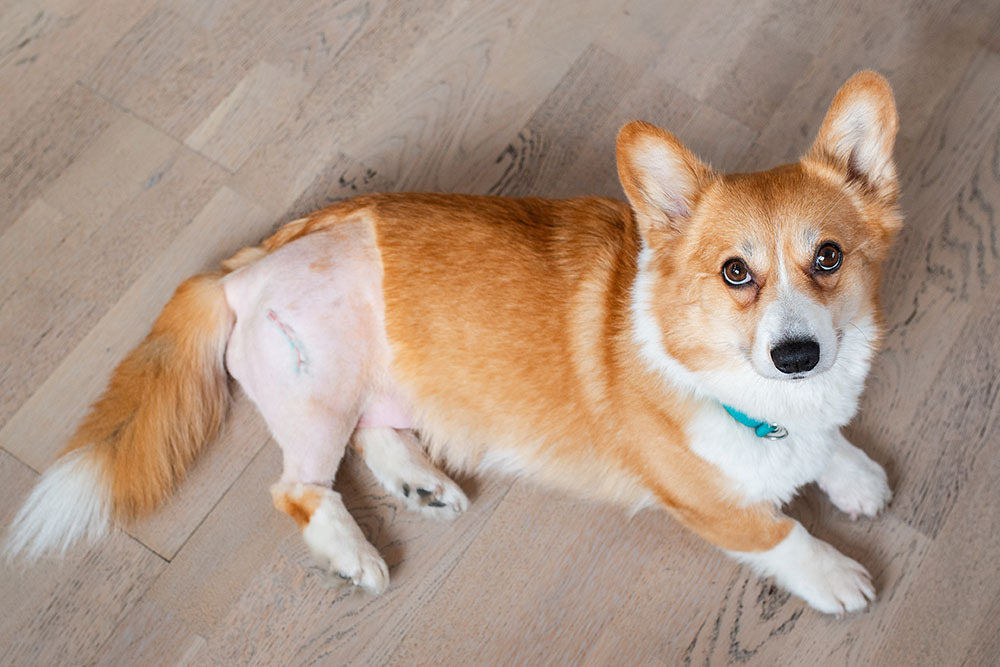
Veterinarians match hip surgery to the individual patient by working through a series of branch points: first, which condition is actually driving the pain, and then which option fits the dog or cat who has to live with the result. The menu is wider than most families expect: a femoral head ostectomy (FHO), which removes the ball of the joint so a cushion of scar tissue can form in its place; a total hip replacement, which restores near-normal mechanics with an implant; juvenile procedures that guide hip development in young, growing dogs; and continued medical management with medication and controlled exercise. Size, age, activity level, and your goals for your pet pull the decision down one branch or another. Matched to the right patient, every one of those paths leads back toward a comfortable, active life.
At Boca Midtowne Animal Hospital, the surgery conversation starts with clear pictures: we take hip X-rays, watch how your dog or cat actually moves, and map the decision with you, from staying the medical course to scheduling a procedure. Pain management for a sore hip keeps your pet comfortable day to day while you weigh the bigger choice, and our Fear Free certified team keeps a painful patient as relaxed as possible for their orthopedic exam. When you are ready to work through your pet’s options, request an appointment at our AAHA-accredited hospital and we will walk through the decisions together.
Four Things to Know Before Hip Surgery
- Surgery for hip disease usually enters the picture only after medication, weight control, and rehabilitation stop keeping your dog or cat comfortable.
- An FHO removes the ball of the hip and lets a cushion of scar tissue take over, which suits smaller dogs, most cats, and young pets with strong muscle support.
- A total hip replacement rebuilds the joint with implants and restores near-normal function, making it the go-to for larger, athletic dogs.
- The right choice depends on your pet’s size, age, activity, and your goals, which is exactly what hip X-rays and an honest conversation help sort out.
What Conditions Lead to Hip Surgery in Dogs and Cats?
Four conditions send most pets toward a hip surgery conversation: hip dysplasia, a traumatic hip luxation, Legg-Perthes disease in small-breed dogs, and severe arthritis.
If your pet is suddenly limping, having trouble with stairs, or doesn’t want to play, reach out to our team. If it’s after hours, you can use our 24/7 VetTriage service for advice or reach out with our concierge care membership to get guidance on how soon your pet should be seen.
Hip Dysplasia
This is the big one, and it usually starts young. Canine hip dysplasia develops when the ball and socket of the joint grow at mismatched rates, leaving the hip loose and prone to the arthritis that follows, and it shows up most often in larger breeds like Labrador Retrievers, German Shepherds, and Golden Retrievers. Cats get it too. Feline hip dysplasia is easy to miss because cats rarely limp the way dogs do; they quietly cut back on jumping and climbing instead. For at-risk breeds, routine wellness screenings can catch a loose hip early, while a growing puppy still has options.
Hip Luxation
Sometimes the trouble arrives all at once. A hip luxation is a femoral head knocked fully out of its socket, usually by blunt trauma like a fall from a balcony or a run-in with a car, and surgery enters the picture when the joint refuses to stay seated after your veterinarian replaces it under sedation. Luxations are more common in pets with hip dysplasia, due to the loose fit of the joint. A dislocated hip is painful and time-sensitive, so bring your pet straight to our urgent care during our open hours, or head to an emergency hospital if it happens after we close.
Legg-Perthes Disease
Small-breed puppies have their own version of hip trouble, and cats develop it too. Legg-Perthes disease starts when the blood supply to the femoral head fails and the bone begins to collapse, and it usually calls for surgery once the bone has broken down. Terriers, Miniature Poodles, and similar small breeds are the usual patients, typically somewhere between five months and a year old.
Severe Hip Arthritis
For plenty of older pets, the road to surgery is a slow one. Severe osteoarthritis in dogs and cats becomes a surgical conversation once daily pain outruns what medication and rehabilitation can control. Arthritis can come after years of hard hiking and play time, due to previous injury, or from day-to-day life with hip dysplasia.
What Is an FHO, and Is It Right for Your Pet?
A femoral head ostectomy, or FHO, removes the ball at the top of the thigh bone so the painful bone-on-bone grinding stops, and scar tissue fills in to act as a flexible false joint. It suits smaller dogs, most cats, and young pets with Legg-Perthes.
How an FHO Works
Rather than rebuilding the joint, an FHO takes the damaged ball away entirely, and the body responds by laying down fibrous tissue between the pelvis and the thigh bone, creating a cushioned connection that bends and carries weight. The trade-off is straightforward: your pet loses a little mechanical smoothness and may keep a subtle change in stride, but they gain a hip that no longer hurts.
Which Pets an FHO Suits Best
The best candidates carry less weight on the joint, which is why smaller-framed dogs and cats tend to thrive after this procedure. Body condition and muscle mass matter more than the calendar here, since a lean, well-muscled patient forms a sturdier false joint than a heavy, out-of-shape one. It’s also the practical answer when a total hip replacement isn’t feasible, whether for reasons of size, health, or family resources.
What FHO Recovery Looks Like
Recovery is active, not restful. Building muscle around the new false joint is what makes the whole thing work, so gentle, guided movement starts early and physical rehabilitation is non-negotiable, not a nice extra. Cats often surprise their families with how quickly they get around, thanks to their light frames and natural agility. Rechecks track how that muscle is rebuilding.
What Does a Total Hip Replacement Involve, and Who Needs One?
A total hip replacement is the option that gets a dog back to near-normal function, which is why it’s the first choice for larger, athletic, and working dogs when a good outcome means running and jumping again. Cats can receive one too, at specialty centers with implants sized for their frame.
How a Total Hip Replacement Works
A total hip replacement swaps out both the femoral head and the socket for prosthetic components that recreate the hip’s normal mechanics, and in well-chosen patients it restores comfortable, athletic function at high success rates.
Which Pets a Total Hip Replacement Suits Best
Ideal candidates have finished growing, carry enough bone to anchor the implant, and are otherwise healthy enough for a more involved operation. Sporting breeds, working dogs, and large companions who need dependable, pain-free power tend to gain the most.
What Total Hip Replacement Recovery Demands
Strict activity restriction is the price of a great outcome. Most patients need eight to twelve weeks of controlled rest, leash walks only, and no running or leaping while the implant settles into the bone, which asks a lot in Boca Raton, where the weather never hands a dog an off-season. That’s a tall order for a cat, too, who thinks in terms of vertical travel, so blocking off counters, cat trees, and high beds becomes part of the plan. The long rest is where questions pile up, and our concierge veterinary care membership is built for families who want that closer level of follow-up between rechecks.
FHO or Total Hip Replacement: How Do the Two Compare?
The core difference is what each one does to the joint. An FHO removes the ball and leans on scar tissue and muscle; a total hip replacement rebuilds it with implants for near-normal movement. Size, activity, and your goals usually decide which one fits.
| Factor | FHO | Total Hip Replacement |
| Joint mechanics | False joint of scar tissue | Implant restores near-normal motion |
| Best patient size | Smaller dogs, most cats | Larger, athletic dogs |
| Recovery style | Early, active rehab | Strict rest for 8 to 12 weeks |
| Long-term function | Good, with a subtle gait change | Closest to normal |
| Relative cost | Lower | Higher |
Can the Right Surgery Prevent Hip Problems in Puppies?
Hip dysplasia treatment options run along a spectrum from joint-preserving surgery in young dogs to full joint replacement in mature ones, which is why matching the individual patient to the method matters more than picking a single best operation. For puppies caught early with loose hips but no arthritis yet, two time-sensitive surgeries can steer hip development before damage sets in. Both work with a growing skeleton, so the window is narrow.
Juvenile pubic symphysiodesis is a minimally invasive procedure performed on puppies under about five months of age, fusing part of the pelvis so the hips rotate into a tighter, more stable fit as the puppy grows. A pelvic osteotomy takes a different route, cutting and rotating the pelvic bones to deepen the socket’s grip on the femoral head in young dogs. If your puppy is a breed prone to hip dysplasia or is already showing signs of sore hips, early X-rays and evaluation allows for more treatment options and better long-term outcomes.
When Is Non-Surgical Care Enough for a Sore Hip?
Plenty of dogs and cats live comfortably for years without ever reaching the operating room. Conservative care is the right call when pain stays manageable, and it works best as a combination rather than a single fix.
- Pain medication: Anti-inflammatories, and for tougher cases a monthly injectable pain medication for dogs or a comparable injection made for cats, ease everyday discomfort.
- Joint supplements: Joint supplements for orthopedic conditions supply cartilage with building blocks like glucosamine and chondroitin, and they can lighten a pet’s reliance on daily pain medication over the long term.
- Weight management: Every extra pound loads a bad hip, so pet obesity prevention is one of the highest-value things a family can do at home.
- Rehabilitation: Veterinary physical rehabilitation uses targeted exercise, underwater treadmills, and manual therapy to rebuild the muscle that stabilizes a painful hip.
- Home setup: Ramps, rugs over slick floors, and a soft orthopedic bed make daily movement easier on stiff joints.
Supplement quality varies widely between products, so ask our team to recommend a formula worth trusting; we stock veterinary-recommended options in our online pharmacy.
Does Diet Really Shape a Growing Puppy’s Hips?
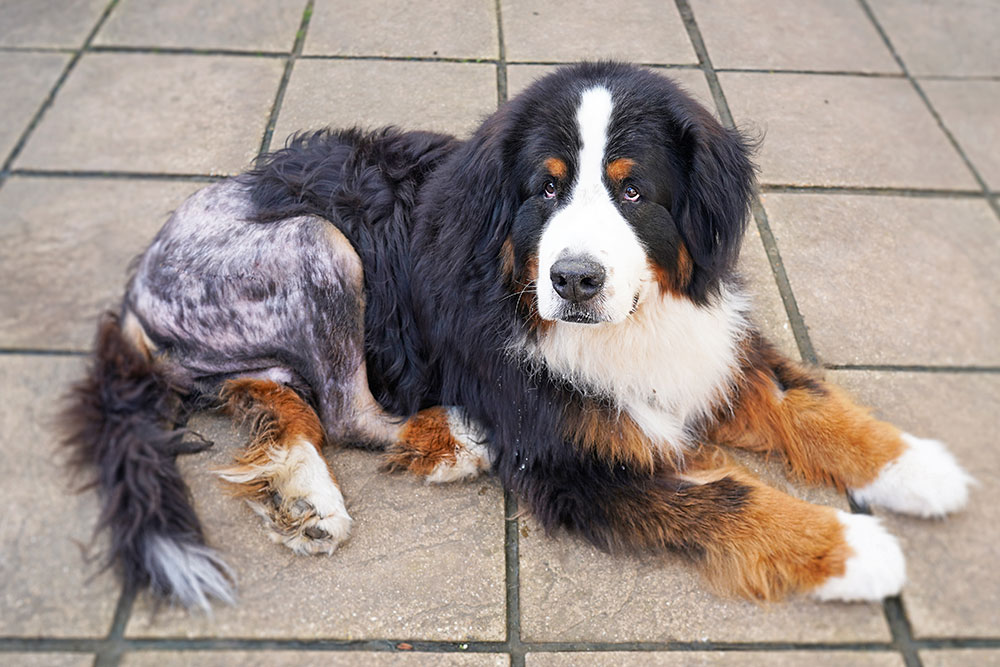
The food a large-breed puppy eats while they’re still growing shapes how the hips form, and resisting the urge to overfeed a roly-poly puppy is half the job.
Developmental orthopedic conditions take root during a puppy’s first year, when overfeeding and rapid growth push large-breed dogs toward the loose, poorly formed hips that show up as disease later on. A large-breed puppy formula controls the calcium and calorie balance that fast-growing joints need, and keeping your dog lean through adulthood protects those hips long after the growth plates close.
How Do We Help You Choose the Right Path?
The decision starts with clear information, not pressure. Our team begins with a hands-on orthopedic exam and hip X-rays, pairs how your pet moves across the room with what the radiographs show, and walks you through what each option would mean for your specific dog or cat. When advanced surgery is the plan, we coordinate the referral and stay involved for pain management and recovery, so you’re never navigating the specialty side alone.
Frequently Asked Questions About Hip Surgery in Pets
Is my pet too old for hip surgery?
Age by itself is rarely the deciding factor. What matters far more is overall health: heart, kidneys, and general fitness. Plenty of senior dogs and cats come through both FHO and total hip replacement beautifully, especially when a sore hip has been holding them back for years. Pre-surgical bloodwork and an exam help us judge whether the body can handle anesthesia and recovery, and that answer is often yes.
Is the surgery painful, and how is pain handled afterward?
Modern orthopedic care takes pain seriously from the start. Pets receive layered pain control before, during, and after the procedure, combining several medications that work in different ways so no single drug has to do all the lifting. Most dogs and cats rest comfortably through the early days and grow steadily more themselves as healing progresses. If your pet seems sore beyond what you expect, that’s always worth a call, because comfort can be adjusted.
My cat barely limps. Could there still be a hip problem?
There could, and hidden hip pain is more common in cats than families realize. Cats are experts at masking discomfort, so a hip issue tends to show up as behavior changes rather than a visible limp. Watch for a cat who stops jumping to the counter, hesitates at the litter box, grooms less along the back end, or hides more than usual. Any of those shifts calls for an exam, since catching feline hip disease early keeps more options open.
Let’s Find the Path That Keeps Your Pet Moving
A sore hip rarely calls for a snap decision. The answer might be an FHO, a total hip replacement, or simply better daily pain control and weight loss, and the right one depends on your pet and what your family is hoping for. Our job is to hand you a clear picture and honest options, then help you act on them.
When you’re ready to talk it through, reach out to Boca Midtowne Animal Hospital and we’ll start with your pet’s comfort. You can book a visit at our Boca Raton hospital whenever you’d rather get straight onto the schedule.










Leave A Comment