


Swollen Lymph Nodes in Pets: When Should You Worry?
Feeling a small lump under your pet’s jaw or behind their knee can be jarring, especially when it shows up during an ordinary cuddle or grooming session. At Boca Midtowne Animal Hospital, we know how quickly that discovery can turn into worry. Enlarged lymph nodes can develop for many reasons, from mild infections to conditions that need closer attention, and a gentle, thorough exam helps us understand what your pet’s body is responding to. Our Fear Free certified team uses advanced tools to keep pets comfortable while we take a closer look and determine the next steps.
Some situations call for timely evaluation, and Boca Midtowne Animal Hospital sees urgent care during open hours so pets can be assessed and stabilized without delay. We accept emergency phone calls 7 days a week until midnight and can accommodate walk-ins, though calling ahead helps ensure prompt attention. If you’ve noticed a new lump or something about your pet just doesn’t feel right, contact us so we can examine your pet, answer your concerns, and guide you forward with compassionate, steady support.
What Happens When You Find a Lump?
Picture this: you’re scratching behind your dog’s ears or stroking your cat’s neck when your fingers brush over something that wasn’t there before. A firm bump. A slight swelling. Your mind races through possibilities.
We understand that reaction completely. The good news is that lymph node swelling has many potential causes, from minor infections your pet is already fighting to conditions that benefit from veterinary care. A thorough exam gives you clarity and a plan, whether that means watchful waiting or simple testing.
In this guide, we cover what lymph nodes do, why they enlarge, what vets look for, and how treatment works. Our goal is to help you understand your pet’s symptoms and how our team supports you at every step.
How Lymph Nodes Protect Your Pet’s Health
Lymph nodes are small filters that help the immune system trap and fight germs. When they detect a problem, they often swell as immune cells multiply. This can happen under the jaw, in front of the shoulders, in the armpits, groin, or behind the knees.
Lymph nodes are located throughout your pet’s body in predictable patterns, and understanding common lymph node locations helps you recognize what you’re feeling during at-home checks. Cat lymph nodes follow similar patterns as dogs, but can be harder to feel in some cats.
Regular veterinary wellness care includes palpating these nodes during our full nose-to-tail examinations to catch changes early.
Why Do Lymph Nodes Swell?
“Lymphadenopathy” means enlarged lymph nodes. It’s a sign that the immune system is active, not a diagnosis by itself. Swelling can be caused by infection or inflammation, cancer, or less common immune-related issues. A single swollen node near a problem area suggests a local issue, while multiple enlarged nodes can indicate a body-wide condition.
Infections and Inflammation
Bacterial, viral, fungal, and parasitic infections often cause nodes to swell as the body fights off invaders. A tooth root abscess might enlarge the nodes under the jaw, while a paw infection could affect nodes in the armpit or behind the knee.
Tick-borne diseases like Lyme disease and leptospirosis can cause more widespread swelling. Certain fungal diseases may do the same in pets exposed to contaminated environments.
In South Florida, year-round warmth means parasite prevention is key, and our fully stocked in-house pharmacy carries flea, tick, and heartworm preventives. Dental disease commonly triggers swelling under the jaw, and routine care lowers this risk. Most infection-related swelling improves once the underlying cause is treated.
When Cancer Causes Lymph Nodes to Enlarge
Lymphoma is the most common cancer affecting lymph nodes and often causes firm, painless swelling of multiple nodes. Early detection and treatment can improve comfort and outcomes. There are many types of cancer in pets, but canine lymphoma and feline lymphoma are among the most frequent.
Multicentric lymphoma affects several node groups at once; other forms involve the gut, chest, skin, or specific organs. Some breeds have higher risk, and cancer can also spread to lymph nodes from other tumors. Understanding lymphoma helps set expectations and guide decisions.
Other Reasons Lymph Nodes Swell
Less common causes include immune-mediated conditions, short-term vaccine reactions, and lymphedema, where fluid builds up due to drainage issues. Our AAHA accreditation reflects our commitment to high diagnostic standards in sorting through these possibilities.
How We Determine What’s Causing the Swelling
We start with a detailed history and physical exam, then recommend testing based on what we find. The aim is to pinpoint the cause and tailor treatment appropriately.
What We Look for During the Physical Exam
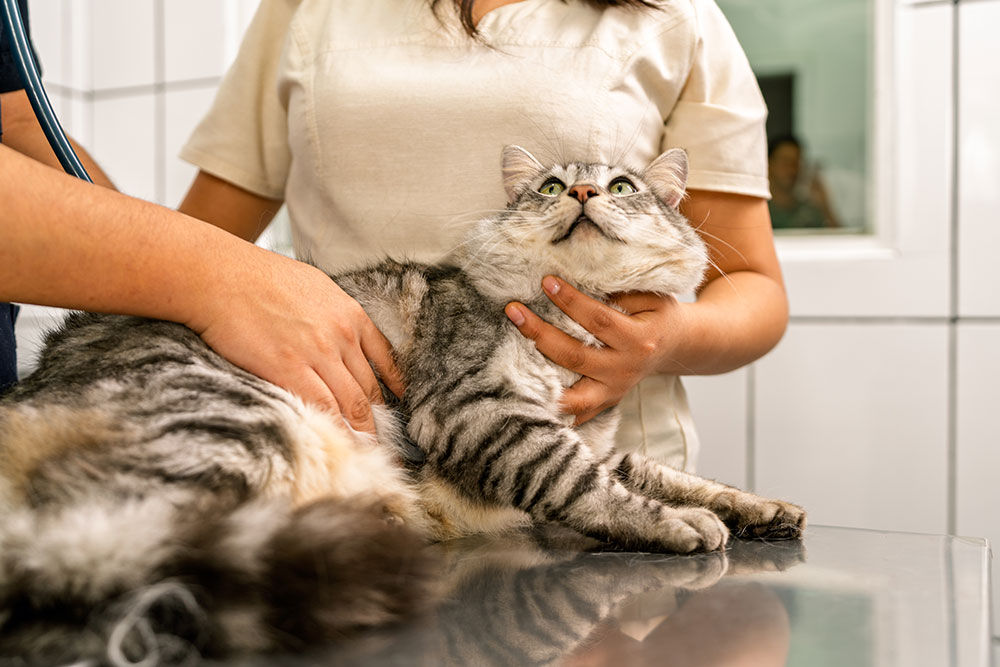
We gently palpate all accessible lymph nodes, noting their size, feel, symmetry, and tenderness. We check whether a single node is affected or several. We also look for signs that point toward the cause, like dental disease, skin lesions, fever, weight loss, or breathing changes.
Patterns matter. A single enlarged node near a wound suggests a local issue. Generalized swelling points toward a systemic condition. This guides our testing and next steps.
Cytology vs Biopsy: Simple Explanations
Fine-needle aspiration cytology is often the first test. A tiny needle collects cells from the node to examine under a microscope. It’s quick, minimally invasive, and our state-of-the-art high definition microscope provides fast, accurate digital cytology results from a pathologist in minutes.
Cytology looks at individual cells and can identify infections, inflammation, or suspicious cancer cells. Sometimes a biopsy is needed for a clearer picture. Cytology vs biopsy differ in that biopsy evaluates a small piece of tissue for architecture, which can confirm certain cancers or more subtle diseases.
If cancer is suspected, staging may include bloodwork, urinalysis, digital radiography, or diagnostic ultrasound. Our diagnostic ultrasound services provide detailed internal imaging of organs and help with cancer diagnosis and staging. These tools help us see how extensive the condition is and plan care.
Treatment Options Based on the Diagnosis
Treatment depends on the cause. Infections and inflammation usually respond to medicine. Cancer care focuses on remission, comfort, and maximizing good time together.
Managing Infections and Inflammation
For infections, we use targeted medications from our fully stocked in-house pharmacy and provide supportive care. Dental problems may require cleaning or extraction to resolve swelling under the jaw. Wounds are treated and kept clean. Anti-inflammatory medication can ease discomfort while the primary issue is treated, and we emphasize comprehensive pain management for all medical conditions.
Most pets improve within days to weeks when the cause is addressed, and follow-up checks confirm the nodes return to normal.
Treating Lymphoma and Other Cancers
Lymphoma is commonly treated with chemotherapy. This aims for remission, where swollen nodes shrink and symptoms improve. Many dogs achieve months to a year or more of high-quality life, and some cats may have even longer remission depending on the subtype.
If chemotherapy isn’t the right fit, steroid therapy can provide short-term relief and comfort. For tumors that involve lymph nodes, treatment may focus on the primary tumor. Our Surgical Laser offers precise, bloodless removal with sealed nerve endings for less pain, reduced infection risk, and faster recovery times.
We also offer Class 4 K-Laser therapy for pain and inflammation management, which can support pets during surgical treatment and recovery. When the goal is comfort-focused care, palliative and hospice support help pets remain comfortable and maintain dignity.
Staying Vigilant After Diagnosis and Treatment
Ongoing monitoring matters. Rechecks help us see how your pet is responding and allow us to adjust treatment promptly. Bloodwork during treatment keeps an eye on organ function and catches side effects early.
At home, get familiar with what your pet’s lymph nodes feel like. If you notice new swelling or changes, or if your pet seems unwell, reach out quickly. Our Fear Free certified approach prioritizes your pet’s emotional well-being during visits, keeping them calm and comfortable while ensuring accurate assessments.
Members of our concierge veterinary care membership program have access to virtual consults during evenings and weekends, priority appointments, and Dr. Man’s personal cell phone for after-hours guidance.
FAQs: Quick Answers
What is a lymph node?
Lymph nodes are small filters that help your pet’s immune system trap and fight germs. When they detect a problem, they can swell.
Is every enlarged lymph node cancer?
No. Dental disease and minor infections often cause swelling under the jaw. A vet exam clarifies the cause.
When should I seek urgent care?
If swelling appears suddenly, your pet is painful, has trouble breathing, or seems very unwell, visit us during open hours. We see urgent care cases and can stabilize critical conditions before transfer to a 24-hour emergency hospital if needed.
What tests might my pet need?
A physical exam, cytology using our high definition digital microscope, and sometimes biopsy or imaging.
Can swollen nodes go away on their own?
Some resolve as infections clear. Others need treatment. If swelling lasts more than a few days or your pet seems off, contact us.
Moving Forward with Clarity and Support
Discovering enlarged lymph nodes can feel overwhelming, but you’re not alone. Prompt evaluation provides answers and a clear plan, whether we’re treating a simple infection or managing a condition like lymphoma.
Many causes of lymphadenopathy are highly treatable, and even cancer can often be managed with compassionate care that prioritizes your pet’s comfort and your family’s goals. Our team at Boca Midtowne Animal Hospital combines advanced diagnostics, caring guidance, and partnership every step of the way.
If you’ve noticed swelling or felt a new lump, request an appointment so we can examine your pet and provide the expert guidance you deserve. We’re here to answer questions, ease worries, and help you make confident decisions about your pet’s care. Contact us to schedule a visit, ask about symptoms, or get advice tailored to your pet.












Leave A Comment