
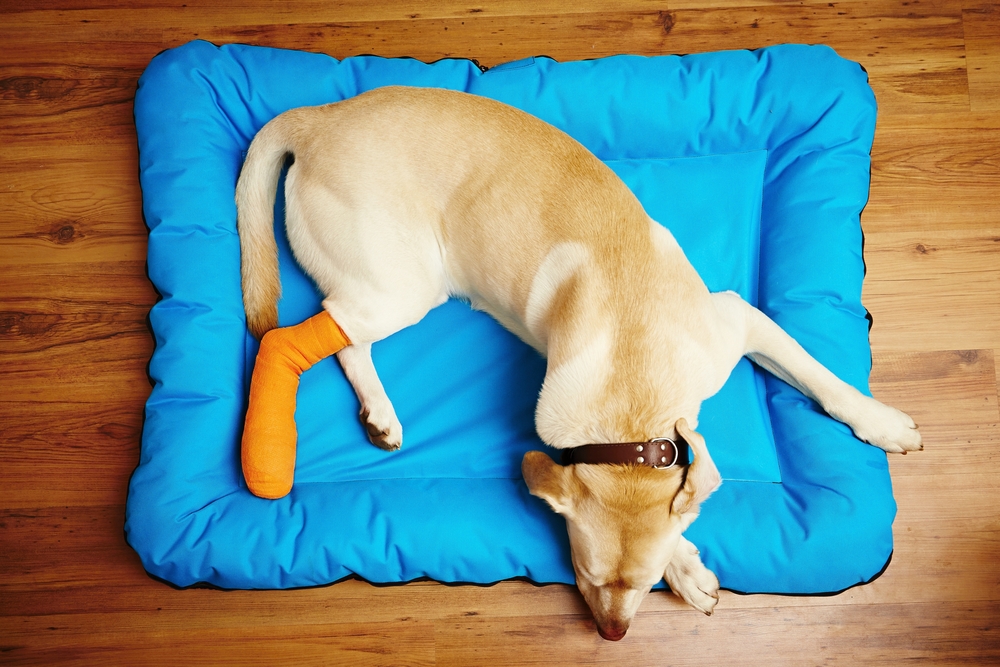
Torn Cruciate Ligaments in Dogs: Prevention, Surgery, and Recovery
One moment your dog is running across the yard, and the next they’re holding up a back leg and refusing to put weight on it. Or maybe the change was more gradual: a subtle limp after walks that you’ve been watching get worse over several weeks. Either scenario can point to a cranial cruciate ligament (CCL) tear, the most common orthopedic injury in dogs. The CCL is the ligament that stabilizes the knee joint, and when it’s damaged, the knee becomes unstable, painful, and prone to progressive arthritis if left untreated.
At Boca Midtowne Animal Hospital, we take a Fear Free approach to evaluating orthopedic injuries, which means minimizing your dog’s stress and pain at every stage. Our team uses diagnostic imaging and hands-on orthopedic exams to confirm the injury, then walks you through the surgical options that exist and recommends which one would fit your dog best based on their size, activity level, and overall health. From the first evaluation through recovery, we stay involved as your dog’s care team. If your dog has been limping or favoring a hind leg, request an appointment so we can take a closer look.
What Is a CCL Injury and Why Does It Happen?
Causes and Risk Factors
The cranial cruciate ligament is the canine equivalent of the human ACL. It runs diagonally inside the knee joint and prevents the shin bone from sliding forward relative to the thigh bone during movement. When it tears, either partially or completely, every step produces abnormal joint movement that causes pain and accelerates cartilage damage.
Canine cruciate ligament injury rarely happens the same way a human sports ACL tear does. In people, it’s usually a single traumatic event. In dogs, it’s typically the end result of gradual ligament degeneration, with a final movement that pushes a partially compromised ligament past its limit.
Common contributing factors include:
- Abrupt pivoting, twisting, or sudden directional changes during play
- Weekend-warrior exercise patterns where a relatively inactive dog suddenly runs hard
- Excess body weight, which increases the load on the knee with every step
- Breed predisposition, particularly Labrador Retrievers, Rottweilers, Golden Retrievers, and Boxers, whose knee geometry places more strain on the CCL over time
- A prior partial tear that was not identified or was managed without surgery
In Boca Raton’s active, outdoorsy environment, dogs that hit the parks and beaches regularly are exposed to the kinds of uneven, unpredictable surfaces and high-intensity play that put knees at risk. Keeping your dog at a healthy weight and staying current with wellness care both make a meaningful difference in long-term joint health.
Signs Your Dog May Have Torn a CCL
What to Watch For
Some dogs tear their CCL suddenly and dramatically, refusing to bear weight at all. Others show a gradual pattern that families initially attribute to soreness or aging. Knowing the difference matters.
Signs that point toward a CCL injury rather than minor soreness:
- Hind-limb limping that is worse after exercise rather than improved by rest
- Visible swelling or thickening along the inside of the knee
- Reluctance to rise from rest, climb stairs, or jump into the car
- A toe-touching gait where the dog barely grazes the ground
- Sitting with the affected leg extended out to the side rather than tucked under
- Lameness that improves slightly with rest, then returns as soon as activity resumes
The key distinction: a minor sprain typically improves noticeably within a week of rest. A CCL injury does not. If the limp is still there after a week of reduced activity, evaluation is overdue.
Diagnosing a CCL Tear
Imaging and Orthopedic Assessment
Diagnosis combines physical examination with imaging. The drawer sign and tibial thrust test assess how much the tibia slides relative to the femur under applied pressure. A positive result confirms ligament instability. Larger or tense dogs sometimes need light sedation to allow an accurate exam.
X-ray diagnostic imaging identifies secondary joint changes like fluid accumulation, early bone spur formation, and arthritic remodeling, and rules out fractures or other bony problems. For complex cases where soft tissue detail is needed, MRI provides a comprehensive view, though it’s typically reserved for situations where standard assessment doesn’t give a complete picture.
Our veterinary services include digital radiography and diagnostic ultrasound, allowing us to begin the evaluation process efficiently and reduce the number of trips required before a treatment plan is established.
What Happens If a CCL Tear Goes Untreated?
This is a question worth answering honestly, because many families hope rest will resolve the problem. It will not.
Without treatment, the unstable knee continues to move abnormally with every step. That ongoing instability accelerates the development of arthritis, which is permanent and progressive. The meniscus, a cartilage pad that cushions the knee, is also at high risk of tearing from the abnormal movement, and a meniscal tear significantly worsens pain and function.
Rest alone may reduce acute pain temporarily, but the joint continues to degrade. Most dogs managed without surgery progressively worsen over months and develop severe, chronic arthritis that limits their quality of life long-term. Early evaluation and treatment, rather than extended observation, produces the best outcomes for the majority of dogs. Contact our team to discuss your dog’s situation before more joint damage accumulates.
Conservative Management: When It’s Appropriate
Conservative management, meaning strict rest and controlled rehabilitation without surgery, is occasionally appropriate for small dogs, typically those under 15 pounds, where the biomechanics of the knee differ enough that fibrous tissue can sometimes stabilize the joint over several months with strict activity restriction.
For medium, large, and giant breed dogs, conservative management consistently produces poor long-term outcomes compared to surgery. The joint rarely stabilizes adequately with rest alone in dogs above 15 to 20 pounds, and arthritis progresses regardless. The goal in discussing conservative management is not to alarm anyone but to make sure families have accurate information. If your dog’s size or health status raises questions about whether surgery is the right path, reach out to us and we can work through those specifics together.
Surgical Treatment Options: TPLO, TTA, and Extracapsular Repair
Choosing the Right Procedure
The goal of surgery is to restore functional stability to the knee and slow arthritis progression. There are three main procedures used in dogs today, and the right one depends on your dog’s size, age, activity level, and anatomy. Our role is to confirm the diagnosis, walk you through what each procedure involves, and recommend the approach that best fits your dog’s specific situation.
TPLO (Tibial Plateau Leveling Osteotomy)
TPLO surgery changes the geometry of the knee joint rather than replacing the torn ligament. The top surface of the tibia is cut and repositioned so that normal walking forces no longer cause the forward shin-bone sliding that the intact CCL was preventing. A bone plate holds the new position while healing occurs. TPLO is considered the gold standard for medium to large breeds and active dogs, with excellent long-term functional outcomes.
TTA (Tibial Tuberosity Advancement)
TTA is another bone-modifying procedure that changes knee mechanics rather than mimicking the ligament. It advances the tibial tuberosity to redirect the forces acting on the joint. It is used in active and medium to large breed dogs and produces outcomes similar to TPLO in appropriate candidates.
Extracapsular Repair (Lateral Suture Technique)
Extracapsular repair places a strong synthetic suture outside the joint to mimic the CCL’s stabilizing function while the body forms fibrous tissue over time. It’s best suited for smaller or less active dogs, and for patients where bone-modifying surgery carries higher risk. Long-term outcomes in larger or highly active dogs are generally less durable than TPLO or TTA.
| Procedure | Best Suited For | Key Benefit |
| TPLO | Medium to large breeds, active dogs | Gold standard long-term outcomes |
| TTA | Medium to large breeds, active dogs | Alternative bone-modifying approach |
| Extracapsular repair | Small dogs, less active patients | Simpler procedure, shorter OR time |
Once we have completed the diagnostic workup, we will discuss your dog’s specific anatomy, weight, and lifestyle and help you understand which procedure would give your dog the best long-term outcome.
Recovery and Rehabilitation After Surgery
Surgery addresses the mechanical problem. Rehabilitation restores strength, range of motion, and confidence. Dogs that skip or rush the recovery protocol take longer to return to normal and are at higher risk of complications or injury to the opposite leg.
A structured recovery includes rehabilitation therapies such as controlled leash walking, hydrotherapy, and therapeutic exercises, which complement the surgical repair and accelerate the return to function. General rehabilitation guidelines following TPLO or TTA follow a staged progression, though your specific discharge plan will be tailored to your dog’s procedure and progress.
General post-surgical recovery milestones:
| Timeframe | Activity Level |
| Weeks 1-2 | Crate rest; leash only for bathroom breaks; incision recheck |
| Weeks 3-4 | Short, slow leash walks; gradual increase in duration |
| Weeks 5-7 | Progressively longer leash walks; supervised low-impact movement |
| Week 8 | Recheck; off-leash activity considered if healing is confirmed |
No running, jumping, or unsupervised play during recovery. The e-collar or cone stays on until your pet has been cleared to have it removed, after the incision is fully healed. These guidelines are not flexible, and overactivity or licking the incision during healing is a leading cause of complications.
Crate Rest: How to Get Through It
There is no gentle way to say it: crate rest is hard, especially for active dogs. But it is the foundation of a successful recovery, and the first two weeks are the most critical.
Practical strategies that help:
- Place the crate where household activity happens so your dog does not feel isolated
- Use food puzzles, stuffed toys, and chews for mental engagement without physical exertion
- Take slow, short sniff walks on leash for mental stimulation
- Maintain a predictable daily schedule so your dog knows what to expect
- Consult our team about calming support options if confinement anxiety becomes a barrier to safe recovery
Surviving crate rest with your dog is genuinely possible with the right preparation and realistic expectations going in. Keep the e-collar (cone) on at all times during recovery to prevent your dog from licking the incision. A KVP Calmer Collar is a softer, more comfortable alternative to traditional plastic cones that dogs tend to tolerate much better, making the post-op period easier for everyone.
Supporting Long-Term Joint Health at Home
Warm-Ups, Surfaces, and Weight
Warm-ups and cooldowns before and after activity reduce injury risk during recovery and beyond. A slow five-minute walk before any activity session gives the joint time to prepare. Non-slip rugs on hard floors, ramps instead of stairs where possible, and avoiding sharp turns on slippery surfaces all reduce strain on the healing leg.
Weight control is arguably the most controllable factor in long-term joint outcome. Every pound of excess weight increases the load on the repaired knee, accelerates arthritis, and raises the risk of injury to the opposite leg, which tears in a significant percentage of dogs within two years of the first injury.
For ongoing joint support, hip and joint supplements can be added to your dog’s daily routine to support cartilage health and smooth movement through the recovery period and beyond. Ask our team which formulation is appropriate for your dog’s size and stage of recovery.
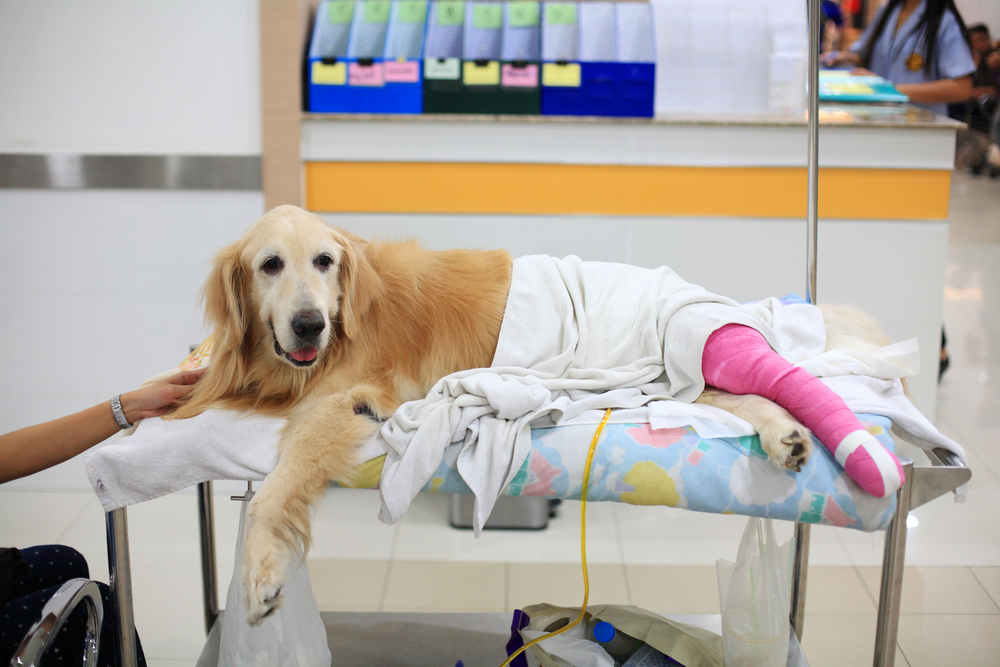
Frequently Asked Questions About CCL Tears in Dogs
Can my dog recover from a CCL tear without surgery?
Very small dogs (under 15 pounds) occasionally stabilize with strict rest over several months. For medium, large, and giant breed dogs, surgery consistently produces better long-term outcomes. Without surgical stabilization, most larger dogs develop progressive arthritis and permanent functional limitations.
How do I know if it’s a CCL tear or just a sprain?
A sprain typically improves meaningfully within one week of rest. A CCL tear does not resolve with rest and often gets worse after a brief period of improvement. If your dog is still noticeably lame after a week off activity, evaluation is the right next step.
Will my dog need surgery on the other leg too?
The risk is real. Studies suggest 40 to 60 percent of dogs with one CCL rupture will injure the opposite leg within two years. Weight management, consistent conditioning, and protective care after the first surgery reduce but do not eliminate that risk.
What is the recovery timeline?
Most dogs reach their 8-week recheck in good shape and can begin off-leash activity from there, with continued strength gains over the following months. Every dog’s recovery is individual, and the discharge plan will reflect your dog’s specific procedure and progress.
A Path Back to an Active Life
CCL injuries are serious, but they are also among the most successfully treated orthopedic problems in veterinary medicine. The dogs that do best are the ones whose families recognize the signs early, pursue the right diagnosis, choose a surgical plan that fits the individual dog, and commit to structured recovery. At Boca Midtowne Animal Hospital, we are AAHA accredited and Fear Free certified, which means the standard of care we hold ourselves to covers not just the technical quality of evaluation but how your dog feels throughout every step of it.
If your dog has been favoring a hind leg or showing any of the signs above, request an appointment or call us at (561) 658-4823. Getting to a diagnosis is the first step toward getting your dog back to the life they love.










Leave A Comment