


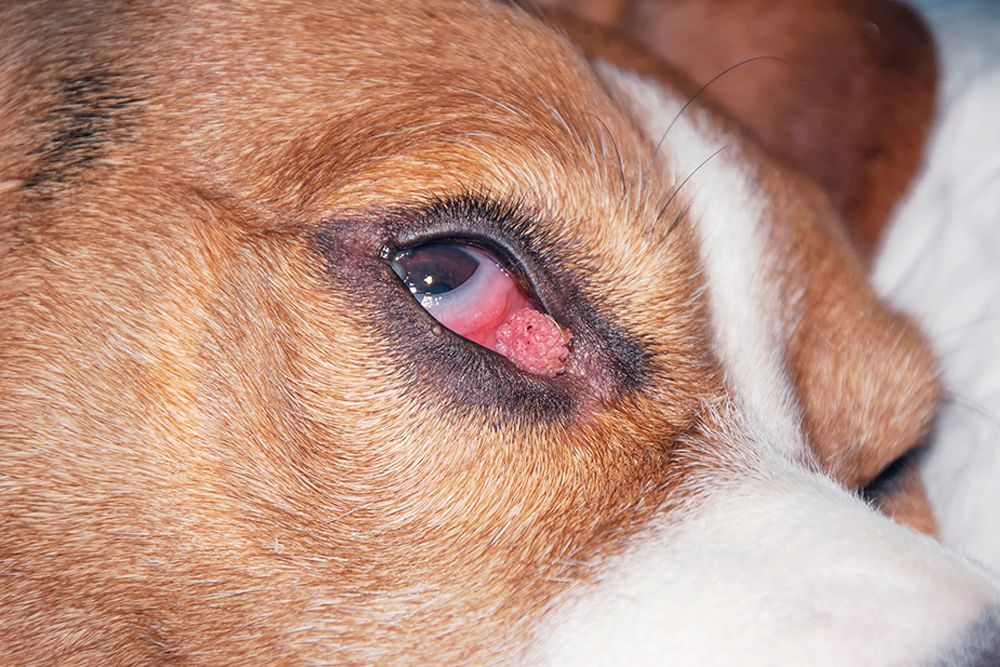
If your dog has been squinting more than usual, rubbing their face on the carpet, or waking up with goopy, teary eyes, it is natural to worry. Eye problems are one of those things that can look minor at first but become serious quickly, especially when the eyelid itself is the source of the trouble. So what does it mean when a pet’s eyelid rolls inward or droops outward, and is surgery really necessary? Entropion and ectropion are two of the most common structural eyelid conditions in dogs and cats, and the good news is that both are highly treatable with the right veterinary care.
At Boca Midtowne Animal Hospital, our AAHA-accredited and Fear Free certified team specializes in gentle, thorough eye evaluations and advanced surgical correction when it is needed. If you have noticed any changes in your pet’s eyes, request an appointment so we can take a closer look.
What Are Entropion and Ectropion?
These two conditions affect the eyelids in opposite ways, but both can cause significant discomfort and put your pet’s vision at risk if left untreated.
Entropion in dogs occurs when the eyelid margin rolls inward, pressing fur and lashes directly against the surface of the eye. Every blink grinds those hairs across the cornea, causing pain, excessive tearing, redness, and mucus discharge. Over time, this constant friction can lead to ulcers, scarring, and even permanent vision changes. Some pets are born with entropion, while others develop it later due to chronic irritation, injury, or age-related tissue changes.
Ectropion is the opposite. The lower eyelid sags or droops outward, exposing the delicate inner lining to air, dust, and bacteria. This leaves the eye vulnerable to chronic irritation, recurrent infections, and persistent discharge. You may notice the inner lid tissue looking red and inflamed, or tear staining that never quite clears up.
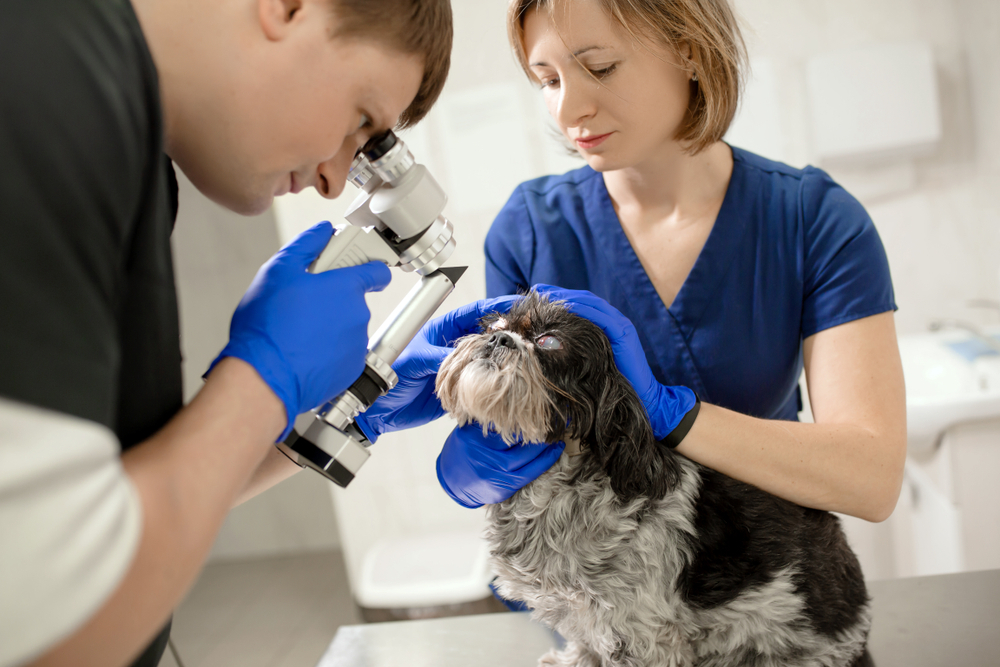
Because multiple common eye conditions can overlap, a thorough evaluation is important. Accurate diagnosis looks at eyelid position, tear production, corneal health, and lash direction to determine exactly what is going on. Our veterinary services include comprehensive eye examinations designed to give you clear answers.
Which Breeds Are Most at Risk for Eyelid Problems?
Genetics and facial structure play a significant role in eyelid abnormalities. Some pets are born with conditions that become obvious in the first few months of life, while others develop changes gradually.
Breeds prone to entropion (inward rolling):
- Shar-Peis, Chow Chows, English Bulldogs, and Mastiffs, where heavy facial folds pull the lids inward
- Rottweilers, Great Danes, and Saint Bernards, where deep-set eyes create similar pressure
- In cats, flat-faced breeds like Persians and Himalayans are most commonly affected
- Flat-face dogs like Pugs, Frenchies, and Boston Terriers tend to have “medial canthal entropion”, where the inner corner of the lower lid rolls inward
Breeds prone to ectropion (outward drooping):
- Bloodhounds, Basset Hounds, Saint Bernards, Cocker Spaniels, Great Danes, and Newfoundlands, where naturally loose lower lids leave the eye exposed
Some breeds can develop both conditions at the same time, a presentation sometimes called “diamond eye,” where the upper lid rolls in while the lower lid droops out.
Beyond breed, eyelid disorders can develop from age-related tissue loosening, chronic eye inflammation, previous injuries, or pain-induced squinting that temporarily mimics entropion. Understanding hereditary eyelid conditions helps breeders and pet owners recognize risk early. If your pet is a predisposed breed, discussing their eye health during veterinary wellness care visits helps us catch changes before they cause damage.
What Symptoms Should Prompt a Vet Visit?
Eye discomfort is not a cosmetic issue. These are signs of eye pain that deserve prompt attention:
- Excessive tearing or thick mucus discharge
- Squinting, keeping one eye partly closed, or sensitivity to light
- Pawing at the face, rubbing against furniture, or becoming head-shy
- Red inner eyelid tissue, corneal cloudiness, or brown pigment changes on the eye surface
- Visible eyelid rolling inward or sagging outward
- Crusting around the eyes or recurrent infections
Cats are especially good at hiding discomfort, so even subtle changes like increased blinking or mild discharge are worth investigating. If your pet is showing any of these signs, request an appointment for an eye evaluation.
What Happens if Eyelid Conditions Go Untreated?
Left unaddressed, both entropion and ectropion cause progressive damage that becomes harder to treat over time.
With entropion, constant lash friction against the cornea can cause corneal ulcers, which are painful open sores that may become infected and threaten vision. Chronic irritation leads to scarring, pigmentation changes across the cornea, and in severe cases, permanent vision loss.
With ectropion, the exposed lower lid acts as a collection point for dust, debris, and bacteria. This results in chronic conjunctivitis, recurrent infections, and persistent eye discharge that never fully resolves with drops alone. The exposed tissue can dry out and sustain further damage.
The longer these conditions go unaddressed, the more complicated treatment becomes and the greater the risk to your pet’s long-term comfort and vision. If you are concerned, contact us sooner rather than later.
How Do Veterinarians Diagnose Eyelid Abnormalities?
A thorough eye examination evaluates eyelid position, corneal surface, tear production, and lash direction. One important step involves applying topical anesthetic drops to distinguish pain-related squinting (spastic entropion) from a true structural problem. This distinction matters because spastic entropion may improve once the underlying irritation is treated, while structural entropion requires surgical correction.
The diagnostic process typically includes:
- Visual inspection of lid position and lash direction before and after numbing drops
- Tear quantity testing and corneal staining to check for dryness, ulcers, or abrasions
- Magnified examination using standard ocular tests to evaluate the corneal surface in detail
- Assessment for eyelash problems like extra lashes (distichia) or misplaced hairs that can mimic or worsen entropion
- Evaluation of overall facial structure, skin folds, and breed conformation
Our team uses gentle, low-stress handling consistent with our Fear Free approach so your pet stays as comfortable as possible during the exam.
What Are the Treatment Options for Eyelid Conditions?
When Is Temporary Tacking the Right Choice?
Not every case requires immediate permanent surgery. Temporary eyelid tacking uses small sutures to hold the eyelid in a more normal position, buying time while the underlying situation is addressed. This approach works well for growing puppies whose facial structure is still developing, pets with pain-induced spastic entropion that may resolve once irritation is treated, and cases where corneal ulcers need to heal before permanent surgery is planned.
Tacking can be repeated if needed, and permanent correction is considered once the pet’s anatomy has stabilized and the true extent of the eyelid problem is clear.
When Is Permanent Surgery Recommended?
Definitive eyelid surgery is recommended when the condition is clearly structural and the pet has finished growing. The specific technique depends on the pet’s species, breed, individual anatomy, and which eyelid is affected.
For entropion, the most common approach involves removing a precise crescent of skin and muscle to roll the eyelid back to its normal position. For ectropion, a small wedge of tissue may be removed to shorten an elongated lid, or a V-to-Y technique can lift a drooping margin. In brachycephalic breeds, a combination approach may be needed to address both conditions simultaneously.
The surgical priority is always conservative correction. Removing too much tissue can overcorrect the eyelid and create new problems, so we aim for optimal positioning with the option of a small revision later if needed. Our hospital offers traditional and laser surgery options that help reduce bleeding and swelling for a smoother recovery, and our BOAS laser surgery expertise reflects our focus on safe anesthesia planning for flat-faced breeds.
What About Entropion in Cats?
Cats often present differently than dogs with eyelid issues. Entropion in cats frequently appears in adult or senior cats rather than at birth and may develop alongside other eye surface problems like corneal sequestrum (a dark plaque on the cornea). Feline cases sometimes need a combination of surgical techniques tailored to their specific anatomy. If you have questions about your cat’s eyes, contact us and we can discuss whether an evaluation is warranted.
What Should You Expect on Surgery Day?
Knowing what happens takes a lot of the anxiety out of the process. Here is the typical flow:
- Pre-operative evaluation confirms the surgical plan, and bloodwork is performed when indicated
- A customized anesthesia protocol is selected based on your pet’s age, breed, and health status
- Pain management begins before the procedure with local nerve blocks and anti-inflammatory medications
- Continuous monitoring tracks heart rate, breathing, blood pressure, and oxygen levels throughout
- The eyelid area is carefully prepared and surgery is performed using magnification and fine instruments for precision
- We communicate with you during the process so you know how things are going
- Your pet recovers from anesthesia under close observation before heading home
Most pets go home the same day. Some complex cases may benefit from longer observation. Our veterinary care in Boca Raton prioritizes safety and comfort at every step.
What Does Recovery Look Like After Eyelid Surgery?
The First Few Days at Home
Mild swelling and bruising are normal and typically peak within 24 to 48 hours before gradually improving. You may notice a small amount of clear discharge around the eye. Your pet will likely be sleepy or subdued from pain medication, which is expected.
The Elizabethan collar (cone) is essential. We know pets are not fans, but it is the single most important thing you can do to protect the surgical site. One good rub with a paw can undo careful suturing, so the cone stays on until we say otherwise.
Administering eye medications can feel tricky at first, and our team is happy to demonstrate techniques before you leave. Keep activity calm, minimize dust exposure, and follow your medication schedule closely.
Call us if you notice: rapid or worsening swelling, thick yellow or green discharge, bleeding from the incision, or loose or missing sutures.
Healing Timeline and Follow-Up Care
Initial healing takes approximately 10 to 14 days, and sutures are typically removed around that time. The eyelid’s final position continues to settle over the following weeks as swelling resolves completely. Recheck appointments confirm proper healing and comfortable lid position.
For growing dogs, we continue monitoring because facial changes can alter lid position as they mature. Occasionally, a small revision may be recommended to optimize comfort, but this is uncommon with a conservative initial approach. Our veterinary wellness care keeps long-term eye health on track.
What Are the Long-Term Outcomes After Eyelid Surgery?
Most pets experience noticeable relief quickly once eyelashes stop scraping the cornea or exposed tissue is protected. Squinting, rubbing, and watery eyes often improve within the first few days of healing. Long-term results are excellent when surgery is performed by an experienced team with careful aftercare at home.
A few things to keep in mind about realistic expectations:
- Pre-existing corneal scarring or pigmentation may not completely resolve, but pain relief and protection from further damage are achieved
- Early intervention typically produces better outcomes and less corneal scarring
- Complications are uncommon and usually manageable
- Cone compliance during recovery is one of the biggest factors in a smooth result
- If your pet is a show dog, some breed registries have rules about surgical corrections that are worth checking before scheduling
Frequently Asked Questions
What is the difference between entropion and ectropion? Entropion is when the eyelid rolls inward, pressing lashes and fur against the eye and causing pain and corneal damage. Ectropion is when the eyelid droops outward, exposing the inner lining to debris and bacteria and leading to chronic irritation and infections.
Can puppies outgrow entropion? Some puppies improve as their facial structure matures. Temporary tacking can protect the eye during this growth period, and permanent correction is planned once the face has finished developing.
Does my pet need surgery right away? Not always. It depends on severity, age, and exam findings. We often start with lubrication and pain control if ulcers are present, then plan surgery once the eye is stable and the true extent of the problem is clear.
How long does recovery take? The incision typically heals within 10 to 14 days, with eyelid position continuing to refine over several weeks. Most pets return to normal activity once cleared by their veterinarian.
Will the problem come back after surgery? Most corrections are long-lasting. Growing dogs or breeds with heavy skin folds may occasionally need a small touch-up, and ongoing wellness care helps us monitor for any changes over time.
Ready to Help Your Pet’s Eyes Feel Better?
Entropion and ectropion are uncomfortable, but they are highly treatable with attentive care and the right plan. Timely, precise surgical correction restores comfort and protects your pet’s vision for the long term. If your pet has been squinting, tearing, or rubbing at their eyes, do not wait for symptoms to worsen.
At Boca Midtowne Animal Hospital, our AAHA standards and Fear Free approach guide everything from diagnostics to recovery so your pet feels safe while we protect their vision. If symptoms are urgent, our urgent care team can stabilize painful eyes and plan next steps. To start a calm, thorough assessment, request an appointment or contact us today.







Leave A Comment